light gazing, ışığa bakmak

Showing posts with label Barbara Pym. Show all posts

Sunday, June 7, 2015

duke's head hotel em Lynn, Norfolk

na carta de Larkin a Pymm, e agora na Paris Review. sobre as férias e por isso, imagino, escolhida, para esta data. com um ligeiro desdém literário pelas férias, à antiga, à Larkin. o género espistolar à vista, também, um livro que gostaria de ler. um pouco como a correspondência entre Sophia e Jorge de Sena.

na história literária do género, as cartas portuguesas e tantas obras anglófilas mais recentes. nesta história limitada faltam tantas outras, de mais longos alcances (um dos pequenos imensos equívocos): a ver, a ver, a ver.


Dear Barbara,

I have a theory that “holidays” evolved from the medieval pilgrimage, and are essentially a kin of penance for being so happy and comfortable in one’s daily life. You’re about to point out the essential fallacy in this, viz., that we aren’t h. & c. in our daily lives, but it’s too late now, the evolution has taken place, and we do the world’s will, not our own, as Jack Tanner says in Man & Superman. Anyway, every year I take my mother away for a week, & this is it. God knows why I chose this place—well, there are certain basic requirements—must be fairly near where she lives, must have single rooms with private bathrooms & lift, must for preference be near the sea … even so, one can make grave errors, & I rather think this is one of them. One forgets that nobody stays in hotels these days except businessmen & American tourists: the food is geared to the business lunch or the steak-platter trade: portion-control is rampant, and the materials cheap anyway (or so I guess: three lamb chops I had were three uncuttable unchewable unanswerable arguments for entry into EEC if—as I suspect—they had made the frozen journey from New Zealand). The presence of the hotel in the Good Food Guide is nothing short of farce. Of course it’s a Trust House, which guarantees a kind of depersonalized dullness. Never stay at a Trust House.
It’s been a depressing day. For one thing, my hearing had gone wrong again: it’s a new one, & had gone wrong before—I’m beginning to feel, as it cost £80, a bit of a mug. (I forget if I’ve ever said that one of the few blessings of my advancing age is a merciful blurring of the sounds around me.) Then, one does get depressed sometimes. Has anyone ever done any work on why memories are always unhappy? I don’t mean really unhappy, as of blacking factories, but sudden stabbing memories of especially absurd or painful memories that one is suffused and excoriated by—I have about a dozen, some 30 years old, some a year or even less, & once one arrives, all the rest follows. I suppose if one lives to be old one’s entire waking life will be spent turning on the spit of recollection over the fires of mingled shame, pain or remorse. Cheerful prospect! Why can’t I recall the pleasure of hearing my Oxford results, having my novel accepted, passing my driving test—things such as these? Life doesn’t work that way.

[…] How exciting to hear you are thinking of turning your austere regard on redbrick academic life (if it is redbrick)! … I should love to offer to stand as technical adviser, but in fact even after 25 years I really know little about provincial university life. As a librarian I’m remote from teaching, examining & research; as a bachelor I’m remote from the Wives’ Club or the Ups & Downs of Entertaining; as an an introvert I hardly notice anything anyway … Oh dear, I really must end—I do hope you are still improving, perhaps not to the point of resuming work, but improving anyway. Sincerest good wishes.

Yours ever,
Philip

- -


se alguma vez julguei juntar no mesmo conceito constantinopla no século dezassete e larkin nas suas férias de classe média com a mãe, junto ao mar, nunca mesmo. a história da história, eis o mais interessante da história.

as denegadas


history of persian literature.

Saturday, December 13, 2014

muitas coisas

era capaz de ouvir repetidamente os inquéritos do parlamento do caso bes, ges besi besa blabla, acho fascinante aquilo, seguramente o mais próximo que já vi na vida dos irmãos karamazov. por outro lado, vender três muffins de chocolate que fiz quase me põe ao lado das irmãs do dr. ricardo. quase. (imagino ler isto daqui a cinco anos e com a minha excelente memória tentar descodificar a coisa). sem tempo para citar longos parágrafos de Barbara Pym, que rendilhado. ("the shoes with sensible heels and rounded toes"). o homem mexeu a meia de leite com vigor inusitado, comparei-o a bater ovos para os insuflar depois do sal e da pimenta. depois agarrou na chávena e a boca ocupou metade do bordo. imagino que alguém possa esbarrar da mesma maneira com o meu hábito de segurar a chávena com as duas mãos, para aquecer os dedos frios. a química que dizem e pode existir é surpreendemente desfeita por idiotices deste tipo, mas não sei porquê. ou talvez tenha a ver com os "sensible heels". muitas coisas.


Thursday, December 11, 2014

Pym


se ele fosse junho, ela seria dezembro; precisamente aquilo que lhe falta a ele.

''What a bad sign it is,'' she writes, ''to get 'The Oxford Book of Victorian Verse' out of the library.''

- -
curioso, ou nada curioso at all, é ser a palavra spinster a que mais se associa a ela num preconceito de séculos. ou que as citações estejam todas dentro deste âmbito. empobrecedor. aliás, não fosse o silêncio, não teria sido possível a escrita. porque será que isso não é claro e evidente?


Monday, April 28, 2008

variações (Quartet in Autumn by Barbara Pym)


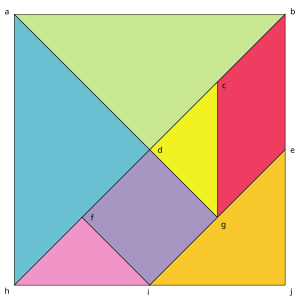
Sempre me atraiu bastante a ideia de variações, a combinação de um número muito reduzido de elementos em conjuntos sucessivos. O número desses conjuntos é finito na maior parte das áreas, mas quase infinito quando as variações são implicam gente. Muito das artes se sustem neste conceito de combinação de elementos, mais tradicionalmente a música. Mas o teatro sobretudo o minimalista (especulo nada mais), as imagens, e a escrita em geral. Uma mão espartana de elementos que se movimentam em combinações sucessivas, dentro de um espaço fechado. Muitas vezes tenho lido que a inibição na arte, seja ela qual for, pode ser mais produtiva do que a liberdade. Não sei, mas o despir de inutilidades e decorações para se jogar apenas com uns poucos essenciais atrai-me. Isto mesmo foi o que li em Quarteto no Outono, de Barbara Pym, a autora menos passível do universo de ser envolvida em especulações deste tipo, e daí talvez não. A escritora do detalhe e do mundo pequeno dos reformados; do bairro, do pequeno funcionário de escritório, dos objectos inúteis e parcos de um quotidiano pobre e carente, e que acaba por brincar, manipulando uma espécie de tangram de vidas. Não é por acaso, nem pouco mais ou menos, que esta obra se chama "Quarteto no Outono". Melhor nome seria mesmo impossível: um livro fascinante.

Larkin meets Eliot meets Auden meets Dylan Thomas..

An interview to keep, here.

Larkin and Pym:"I suppose I used to write many more letters than I do now, but
so did everyone. Nowadays I keep up with one or two people, in
the sense of writing when there isn’t anything special to say. I love
getting letters, which means you have to answer them, and there
isn’t always time. I had a very amusing and undemanding correspondence
with the novelist Barbara Pym, who died in 1980, that
arose simply out of a fan letter. I wrote her and went on for over
ten years before we actually met. I hope she liked getting my letters,
I certainly liked hers. "


Larkin meets...:
"INTERVIEWER
Did you ever meet Eliot?
LARKIN
I didn’t know him. Once I was in the Faber offices—the old
ones, 24 Russell Square, that magic address!—talking to Charles
Monteith, and he said, Have you ever met Eliot? I said no, and to
my astonishment he stepped out and reappeared with Eliot, who
must have been in the next room. We shook hands, and he
explained that he was expecting someone to tea and couldn’t stay.
There was a pause, and he said, I’m glad to see you in this office.
The significance of that was that I wasn’t a Faber author—it must
have been before 1964, when they published The Whitsun
Weddings—and I took it as a great compliment. But it was a shattering
few minutes, I hardly remember what I thought.
INTERVIEWER
What about Auden? Were you acquainted?
LARKIN
I didn’t know him, either. I met Auden once at Stephen
Spender’s house, which was very kind of Spender, and in a sense he
was more frightening than Eliot. I remember he said, Do you like
living in Hull? and I said, I don’t suppose I’m unhappier there than
I should be anywhere else. To which he replied, Naughty, naughty.
I thought that was very funny.
But this business of meeting famous writers is agonizing; I had
a dreadful few minutes with Forster. My fault, not his. Dylan
Thomas came to Oxford to speak to a club I belonged to, and we
had a drink the following morning. He wasn’t frightening. In fact,
and I know it sounds absurd to say so, but I should say I had more
in common with Dylan Thomas than with any other “famous
writer,” in this sort of context. "

 
Share