depois de Walk, lembro outros caminhantes. Rousseau e Thoreau. o flâneur de Baudelaire, Sebald. um universo limitado, por agora. a poesia de Pasolini é caminhante também. um grande número de personagens caminha. os anos cinquenta e sobretudo os sessenta deram velocidade ao fugir da paisagem. Perec escreveu um livro sem 'e' (foi ele? foi); assim fujo aos acentos que a máquina infernal ignora.
a caleche de Gogol fica a meio caminho: entre o solitário caminhante e a 'road trip'.
Showing posts with label Walden. Show all posts
Showing posts with label Walden. Show all posts
Sunday, August 19, 2012
walk

Friday, October 7, 2011
“Everywhere is walking distance if you have the time.” Stephen Wright
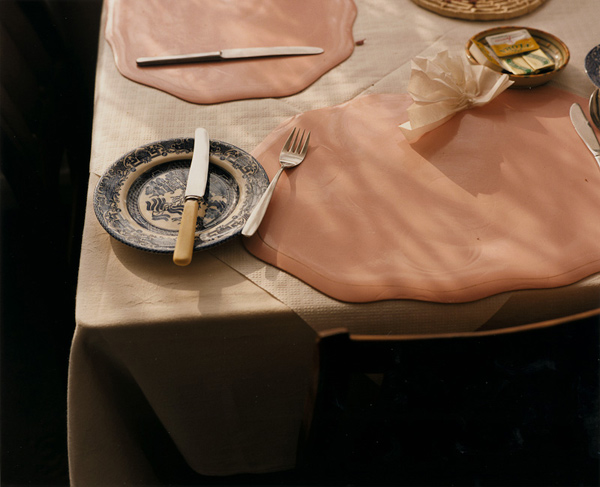
via UYW para mostrar o trabalho de Susan Lipper. a tornar urgente o retorno ao vaguear que comecei com Walden.
o site.
Tuesday, April 13, 2010
retirado dos fóruns
" I think people should give the guy some credit. He's the original John Lennon, man, the original hippy." ----------"I think Thoreau's greatest contribution to all of us, is his ennoblement of the idea of nonviolent resistance and to THINK for ourselves." ---------------"Se Henry David Thoreau (1817-1862) é o pai-fundador do anarquismo, esse seu pequeno e fulgurante ensaio, A Desobediência Civil, é o livro do Gênesis" (este, daqui)
Monday, April 12, 2010
Thoreau: recursos
por redenção, quem sabe.
no NY Times. Thoreau, por Joyce Carol Oates.
"Eventually I would read other works of Thoreau's and even teach ''Walden'' numberless times (in startling but always fruitful juxtaposition with, among other texts, Freud's ''Civilization and Its Discontents,'' Nietzsche's ''Thus Spake Zarathustra,'' ''The Jungle,'' by Upton Sinclair, Lewis Carroll's ''Alice'' books and ''The Hunting of the Snark''), but it is the ''Walden'' of my adolescence I remember most vividly - suffused with the powerfully intense, romantic energies of youth, the sense that life is boundless, experimental, provisionary, ever-fluid and unpredictable, the conviction that, whatever the accident of the outer self, the truest self is inward, secret, inviolable."
Thoreau online ("My life is like a stroll upon the beach / As near the ocean’s edge as I can go")
aqui.
"AT LENGTH we reached the seemingly retreating boundary of the plain, and entered what had appeared at a distance an upland marsh, but proved to be dry sand covered with Beach-grass, the Bearberry, Bayberry, Shrub-oaks, and Beach-plum, slightly ascending as we approached the shore; then, crossing over a belt of sand on which nothing grew, though the roar of the sea sounded scarcely louder than before, and we were prepared to go half a mile farther, we suddenly stood on the edge of a bluff overlooking the Atlantic. Far below us was the beach, from half a dozen to a dozen rods in width, with a long line of breakers rushing to the strand. The sea was exceedingly dark and stormy, the sky completely overcast, the clouds still dropping rain, and the wind seemed to blow not so much as the exciting cause, as from sympathy with the already agitated ocean. The waves broke on the bars at some distance from the shore, and curving green or yellow as if over so many unseen dams, ten or twelve feet high, like a thousand waterfalls, rolled in foam to the sand. There was nothing but that savage ocean between us and Europe."
de Cape Cod.
Saturday, April 10, 2010
não há bela
"As a contribution to the Comic Literature of America, Walden is worthy of some attention, but in no other respect." a review do NY Times a Walden no dia 22 de Setembro de 1854.
um pouco como Sintra
ou como o herói romântico, solitário, se metamorfoseou num anti-herói comunitário.
"In fact Walden Pond is a major urban park with a dual purpose and a schizophrenic soul. The park keepers, the Massachusetts Department of Environmental Management (DEM), perpetuate the myth that Walden remains Thoreaus meditative center. A replica of Thoreaus cabin sits beside the parking lot. The store near the parking lot sells books by and about Thoreau.
The myth is buoyed by rock celebrities who periodically stage concert benefits to "Save Walden Pond." Yet far from being a place of contemplation, the pond is visited by more than 600,000 people a year. The vast majority of these visitors appear solely in the summer months. In Spring and Summer, hundreds, sometimes thousands, of people spin cast for stocked fish in the pond, lining the banks shoulder to shoulder. They compete with hundreds of families who come to swim at the artificial beach near the road along the eastern edge of the park. In good weather, Walden Pond is a mass of humanity, a stew of frantic motion, boom boxes and squealing children.
In fact, what Massachusetts fondly calls "the birthplace" of environmental consciousness is a giant swimming pool, an over-fished fishing hole, a park masquerading as a contemplative shrine. If you are seeking solace and peaceful communion, never make the mistake I did of visiting Walden on a beautiful Spring weekend."
(daqui)
e ainda: "Now Walden Pond has the highest concentration of urine of any pond in New England"...

Friday, April 9, 2010
fazer pão
"The reader will perceive that I am treating the subject rather from an economic than a dietetic point of view, and he will not venture to put my abstemiousness to the test unless he has a well-stocked larder.
Bread I at first made of pure Indian meal and salt, genuine hoe-cakes, which I baked before my fire out of doors on a shingle or the end of a stick of timber sawed off in building my house; but it was wont to get smoked and to have a piny flavor, I tried flour also; but have at last found a mixture of rye and Indian meal most convenient and agreeable. In cold weather it was no little amusement to bake several small loaves of this in succession, tending and turning them as carefully as an Egyptian his hatching eggs. They were a real cereal fruit which I ripened, and they had to my senses a fragrance like that of other noble fruits, which I kept in as long as possible by wrapping them in cloths. I made a study of the ancient and indispensable art of bread-making, consulting such authorities as offered, going back to the primitive days and first invention of the unleavened kind, when from the wildness of nuts and meats men first reached the mildness and refinement of this diet, and travelling gradually down in my studies through that accidental souring of the dough which, it is supposed, taught the leavening process, and through the various fermentations thereafter, till I came to "good, sweet, wholesome bread," the staff of life. Leaven, which some deem the soul of bread, the spiritus which fills its cellular tissue, which is religiously preserved like the vestal fire — some precious bottleful, I suppose, first brought over in the Mayflower, did the business for America, and its influence is still rising, swelling, spreading, in cerealian billows over the land — this seed I regularly and faithfully procured from the village, till at length one morning I forgot the rules, and scalded my yeast; by which accident I discovered that even this was not indispensable — for my discoveries were not by the synthetic but analytic process — and I have gladly omitted it since, though most housewives earnestly assured me that safe and wholesome bread without yeast might not be, and elderly people prophesied a speedy decay of the vital forces. Yet I find it not to be an essential ingredient, and after going without it for a year am still in the land of the living; and I am glad to escape the trivialness of carrying a bottleful in my pocket, which would sometimes pop and discharge its contents to my discomfiture. It is simpler and more respectable to omit it. Man is an animal who more than any other can adapt himself to all climates and circumstances. Neither did I put any sal-soda, or other acid or alkali, into my bread. It would seem that I made it according to the recipe which Marcus Porcius Cato (17) gave about two centuries before Christ. "Panem depsticium sic facito. Manus mortariumque bene lavato. Farinam in mortarium indito, aquae paulatim addito, subigitoque pulchre. Ubi bene subegeris, defingito, coquitoque sub testu." Which I take to mean, — "Make kneaded bread thus. Wash your hands and trough well. Put the meal into the trough, add water gradually, and knead it thoroughly. When you have kneaded it well, mould it, and bake it under a cover," that is, in a baking kettle. Not a word about leaven. But I did not always use this staff of life. At one time, owing to the emptiness of my purse, I saw none of it for more than a month.
Every New Englander might easily raise all his own breadstuffs in this land of rye and Indian corn, and not depend on distant and fluctuating markets for them. Yet so far are we from simplicity and independence that, in Concord, fresh and sweet meal is rarely sold in the shops, and hominy and corn in a still coarser form are hardly used by any. For the most part the farmer gives to his cattle and hogs the grain of his own producing, and buys flour, which is at least no more wholesome, at a greater cost, at the store. I saw that I could easily raise my bushel or two of rye and Indian corn, for the former will grow on the poorest land, and the latter does not require the best, and grind them in a hand-mill, and so do without rice and pork; and if I must have some concentrated sweet, I found by experiment that I could make a very good molasses either of pumpkins or beets, and I knew that I needed only to set out a few maples to obtain it more easily still, and while these were growing I could use various substitutes beside those which I have named. "For," as the Forefathers sang, —
"we can make liquor to sweeten our lips
Of pumpkins and parsnips and walnut-tree chips."
Finally, as for salt, that grossest of groceries, to obtain this might be a fit occasion for a visit to the seashore, or, if I did without it altogether, I should probably drink the less water. I do not learn that the Indians ever troubled themselves to go after it."
- - -
também no capítulo 1 do Walden.
canivete
"If I wished a boy to know something about the arts and sciences, for instance, I would not pursue the common course, which is merely to send him into the neighborhood of some professor, where anything is professed and practised but the art of life; — to survey the world through a telescope or a microscope, and never with his natural eye; to study chemistry, and not learn how his bread is made, or mechanics, and not learn how it is earned; to discover new satellites to Neptune, and not detect the motes in his eyes, or to what vagabond he is a satellite himself; or to be devoured by the monsters that swarm all around him, while contemplating the monsters in a drop of vinegar. Which would have advanced the most at the end of a month — the boy who had made his own jackknife from the ore which he had dug and smelted, reading as much as would be necessary for this — or the boy who had attended the lectures on metallurgy at the Institute in the meanwhile, and had received a Rodgers' penknife from his father? Which would be most likely to cut his fingers?... " no capitulo 1 do Walden. de repente lembrei-me de Into the Wild. e de Dead Poet's Society [to "suck the marrow out of life"]. deve haver muitos mais.
e lembrei-me: "Christopher McCandless: I'm going to paraphrase Thoreau here... rather than love, than money, than faith, than fame, than fairness... give me truth." em Into the Wild. e ainda: "The meetings of the fictional Dead Poets Society in the eponymous 1989 film were all opened with a quote from Walden."
Thursday, April 8, 2010
Updike on Thoreau
aqui.
"A century and a half after its publication, Walden has become such a totem of the back-to-nature, preservationist, anti-business, civil-disobedience mindset, and Thoreau so vivid a protester, so perfect a crank and hermit saint, that the book risks being as revered and unread as the Bible. Of the American classics densely arisen in the middle of the 19th century - Hawthorne's Scarlet Letter (1850), Melville's Moby-Dick (1851), Whitman's Leaves of Grass (1855), to which we might add Harriet Beecher Stowe's Uncle Tom's Cabin (1854) as a nation-stirring bestseller and Emerson's essays as an indispensable preparation of the ground - Walden has contributed most to America's present sense of itself."
há quem saiba o que diz.
Wednesday, April 7, 2010
reveries
Rousseau foi uma avalanche, Thoreau discípulo tardio. Rousseau iniciador, mas estas caminhadas foram forçadas pela velhice e pelo exílio. em Walden os caminhos eram novos e voluntários. Rousseau vegetariano no papel, predador na vida. Thoreau uma lua toda a brilhar no lago, podia chamar-lhe integridade.
Tuesday, April 6, 2010
agora:
quero isto. e quero isto. depois do Walden, estava condenada.
[grande Cotovia].
"On Thursday, the twenty-fourth of October, 1776, I walked after dinner through the Boulevards, as far as the Rue du Chemin-vert; from whence I gained the heights of Ménil-montant, and, passing through the vineyards and meadows, crossed, as far as Charronne, the lovely manor that separates those two villages; after which, I took a circle, designing to cross the same meadows by another path." todo online, só no google books que lhe deu uma introdução romantizada ("This is a digital copy of a book that was preserved for generations on library shelves before it was carefully scanned by Google as part of a project to make the world’s books discoverable online.") está bem, não me aborrece nada. preferia o original mas ficaria pela terceira linha, senão pela segunda.
Thursday, March 18, 2010
será que
ainda vou a tempo de cair pelo Walden.
"Why level downward to our dullest perception always, and praise that as common sense? The commonest sense is the sense of men asleep, which they express by snoring. "
as minhas ideias estão num local insustentável.
Tuesday, March 16, 2010
coisa com coisa
" It was pleasant to see my whole household effects out on the grass, making a little pile like a gypsy's pack, and my three-legged table, from which I did not remove the books and pen and ink, standing amid the pines and hickories. They seemed glad to get out themselves, and as if unwilling to be brought in. I was sometimes tempted to stretch an awning over them and take my seat there. It was worth the while to see the sun shine on these things, and hear the free wind blow on them; so much more interesting most familiar objects look out of doors than in the house." no capítulo 4 do Walden.
a mesma ideia que encontrei no Why Don't you Dance? de Raymond Carver.
" The chiffonier stood a few feet from the foot of the bed. He had emptied the drawers into cartons that morning, and the cartons were in the living room. A portable heater was next to the chiffonier. A rattan chair with a decorator pillow stood at the foot of the bed. The buffed aluminum kitchen set took up a part of the driveway. A yellow muslin cloth, much too large, a gift, covered the table and hung down over the sides. A potted fern was on the table, and a few feet away from this stood a sofa and chair and a floor lamp. The desk was pushed against the garage door. A few utensils were on the desk, along with a wall clock and two framed prints. There was also in the driveway a carton with cups, glasses, and plates, each object wrapped in newspaper. That morning he had cleared out the closets, and except for the three cartons in the living room, all the stuff was out of the home. He had run an extension cord on out there and everything was connected. Things worked, no different from how it was when they were inside."
" The chiffonier stood a few feet from the foot of the bed. He had emptied the drawers into cartons that morning, and the cartons were in the living room. A portable heater was next to the chiffonier. A rattan chair with a decorator pillow stood at the foot of the bed. The buffed aluminum kitchen set took up a part of the driveway. A yellow muslin cloth, much too large, a gift, covered the table and hung down over the sides. A potted fern was on the table, and a few feet away from this stood a sofa and chair and a floor lamp. The desk was pushed against the garage door. A few utensils were on the desk, along with a wall clock and two framed prints. There was also in the driveway a carton with cups, glasses, and plates, each object wrapped in newspaper. That morning he had cleared out the closets, and except for the three cartons in the living room, all the stuff was out of the home. He had run an extension cord on out there and everything was connected. Things worked, no different from how it was when they were inside."
e afinal a mesma ideia que já me tinha atraído aqui. and the fun part: "How much does your life weigh? Imagine for a second that you're carrying a backpack. I want you to pack it with all the stuff that you have in your life... you start with the little things. The shelves, the drawers, the knickknacks, then you start adding larger stuff. Clothes, tabletop appliances, lamps, your TV..." do filme Up in the Air, claro.
Thursday, March 4, 2010
"life in the woods", número dois
a última vez que discordei tanto de qualquer coisa foi com a Deusa e o Alfabeto, ["You may disagree with him, and you may not always understand him, but this is probably true on some level for virtually all Walden readers, and you should not let it keep you from enjoying the book."] mas não há qualquer tipo de comparação, até porque este lago está para além do concordar, já foi água que passou e secou. como ele próprio diz: "Some are dinning in our ears that we Americans, and moderns generally, are intellectual dwarfs compared with the ancients, or even the Elizabethan men. But what is that to the purpose? A living dog is better than a dead lion. Shall a man go and hang himself because he belongs to the race of pygmies, and not be the biggest pygmy that he can? Let every one mind his own business, and endeavor to be what he was made." e, no entanto, no meio das aulinhas, é sempre proveitoso encontrar objectos brilhantes, vidros partidos. um corvo. afinal ando à procura de quê?
all about Thoreau, here.
Wednesday, March 3, 2010
"life in the woods"
também no sonho de Yvonne e na realidade de Lowry.
isto no encalço do Walden, under  the influence do vulcão.
 the influence do vulcão.
e o jantar foi Polenta with Wild Mushrooms, salada de verdes com romã e pinhões, petits pots de crème, do livro Food of the Mediterranean.
Subscribe to:
Posts (Atom)


