"Having children also makes it difficult to get out of the house. With a child you certainly can’t be a Bruce Chatwin or a Hemingway, living the adventurer-writer life. No running with the bulls at Pamplona. If you value your relationships with your children, you can’t write about them. You have to make up other, less convincing children. There is also one’s inclination to be charming instead of presenting a grittier truth about the world. But then, having children has also made me this particular writer. Without my children, I’d have written with less fervor; I wouldn’t understand life in the same way. I’d write fewer comic scenes, which are the most challenging. I’d probably have become obsessively self-absorbed, or slacked off. Maybe I’d have become an alcoholic. Many of the writers I love most were alcoholics. I’ve made my choice, I sometimes think: Wonderful children instead of hard liquor.", Louise Erdrich na Paris Review.
mesmo sem filhos, não sei se poderia correr com os touros de Pamplona.
Saturday, April 7, 2012
'adventurer-writer', ou 'obsessively self-absorbed'

Wednesday, June 22, 2011
crown of thorns
"Her look was black and endless and melting pure. She looked through him. She saw into the troubled thrashing woods of him, a rattling thicket of bones. She saw how he'd woven his own crown of thorns. She saw how although he was not worthy he'd jammed this relief on his brow. Her eyes stared into some hidden place but blocked him out. Flat black." os olhos negros do veado. estar na pele de um alcoólico, entre o trágico e a comédia. em Love Medicine, de Erdrich.
(deer killing scene, aqui em .pdf)
Thursday, June 2, 2011
Erdrich
porque é que não é única e inesquecível? pelo efeito pernicioso da escrita criativa na sua expressão. a sua capacidade de empatia (viver outras vidas) é enorme e tem a força do storytelling chippewa. milhares de pessoas podem contrariar isto, mas foi no que pensei agora.
Tuesday, May 31, 2011
'Love Medicine'


(...)


knitting
"By that time, too, Dot's belly was round and full for she was due in October. The child rode high, and she often rested her forearms on it while she knitted. One of Dot's most peculiar feats was transforming that gentle task into something perverse. She knit viciously, jerking the yarn around her thumb until the tip whitened, pulling each stitch so tightly that the little garments she finished stood up by themselves like miniature suits of mail."
Louise Erdrich em Love Medicine.
que conta uma história bem contada. os contos em primeira pessoa entrelaçados, sem decorações, através de frases curtas. para mim, algures entre a sua própria história que aqui aparece tão difusa e as aulas de bem escrever dos anos oitenta. podem chamar-lhe inovative mas, enfim, o mestre existe. talvez o maior accomplishment seja esse que é pedido da ficção: permitir que durante um determinado período de tempo o leitor viva de facto noutro lado.
Louise Erdrich navigator, no NY Times.
Sunday, May 29, 2011


Thursday, May 26, 2011
rhubarb pie (2)
"But once they smash there is no way to put them right."
Louise Erdrich em Love Medicine.
Wednesday, May 25, 2011
rhubarb pie
..."King was trying to drown Linette" (...)
All the pies were smashed. Torn open. Black juice bleeding through the crusts. Bits of jagged shells were stuck to the wall and some were turned completely upside down. Chunks of rhubarb were scraped across the floor. Meringue dripped from the towels.
"The pies!" I shrieked. "You goddam sonofabitch, you broke the pies!"
His eyes widened. When he glanced around at the destruction, Lynette scuttled under the table. He took in what he could, and then his fists lowered and a look at least resembling shame, confusion, swept over his face, and he rushed past me."
Louise Erdrich em Love Medicine.
aqui, em .pdf, The World's Greatest Fishermen, com boas ilustrações de John Schmelzer.
este conto escrito em colaboração com o seu marido esteve na origem de Love Medicine.
este pedaço de texto sofreu mínimas alterações.

talvez o que verdadeiramente reste seja - Black juice bleeding through the crusts.
Tuesday, May 24, 2011
s/n
"When I had to go on my first book tour—those are the lowest points in my life, the times just before a book tour, when I have to leave my children—I was sitting on a plane next to a psychiatrist. I said to her, “I’ve just written this book and it has another abandoned child in it. Another loveless person abandons another child in the beginning. What is it about abandonment?” This psychiatrist, who had a deep, scratchy voice, said, “My dear, we are all abandoned.”
Louise Erdrich na entrevista da Paris Review, aqui.
John Wayne
“Dear John Wayne”
Louise Erdrich
August and the drive-in picture is packed.
We lounge on the hood of the Pontiac
surrounded by the slow-burning spirals they sell
at the window, to vanquish the hordes of mosquitoes.
Nothing works. They break through the smoke screen for blood.
Always the lookout spots the Indian first,
spread north to south, barring progress.
The Sioux or some other Plains bunch
in spectacular columns, ICBM missiles,
feathers bristling in the meaningful sunset.
The drum breaks. There will be no parlance.
Only the arrows whining, a death-cloud of nerves
swarming down on the settlers
who die beautifully, tumbling like dust weeds
into the history that brought us all here
together: this wide screen beneath the sign of the bear.
The sky fills, acres of blue squint and eye
that the crowd cheers. His face moves over us,
a thick cloud of vengeance, pitted
like the land that was once flesh. Each rut,
each scar makes a promise: It is
not over, this fight, not as long as you resist.
Everything we see belongs to us.
A few laughing Indians fall over the hood
slipping in the hot spilled butter.
The eye sees a lot, John, but the heart is so blind.
Death makes us owners of nothing.
He smiles, a horizon of teeth
the credits reel over, and then the white fields
again blowing in the true-to-life dark.
The dark films over everything.
We get into the car
scratching our mosquito bites, speechless and small
as people are when the movie is done.
We are back in our skins.
How can we help but keep hearing his voice,
the flip side of the sound track, still playing:
Come on, boys, we got them
where we want them, drunk, running.
They'll give us what we want, what we need.
Even his disease was the idea of taking everything.
Those cells, burning, doubling, splitting out of their skins.
memory
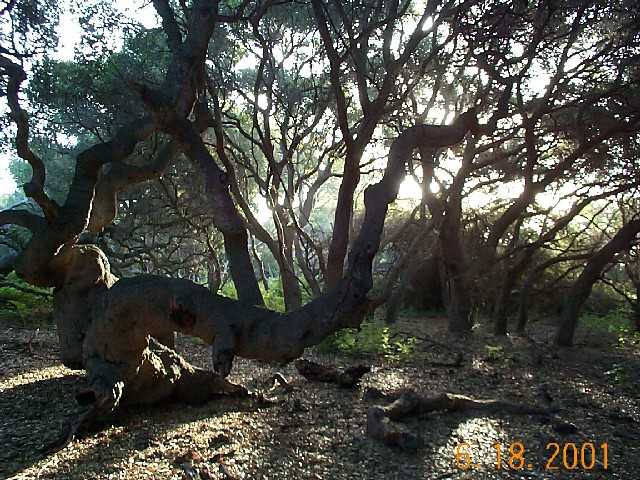
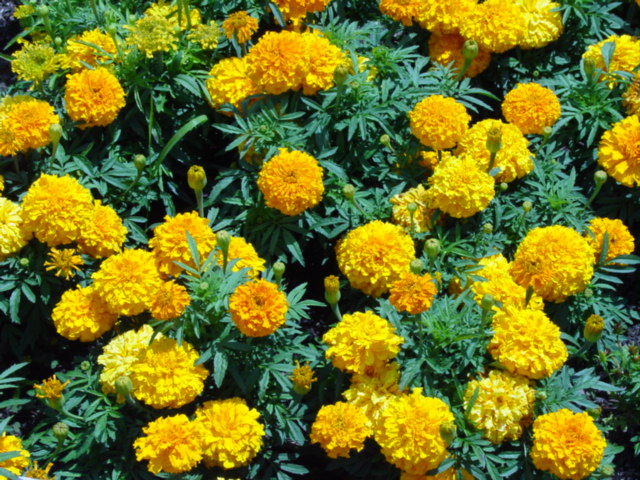
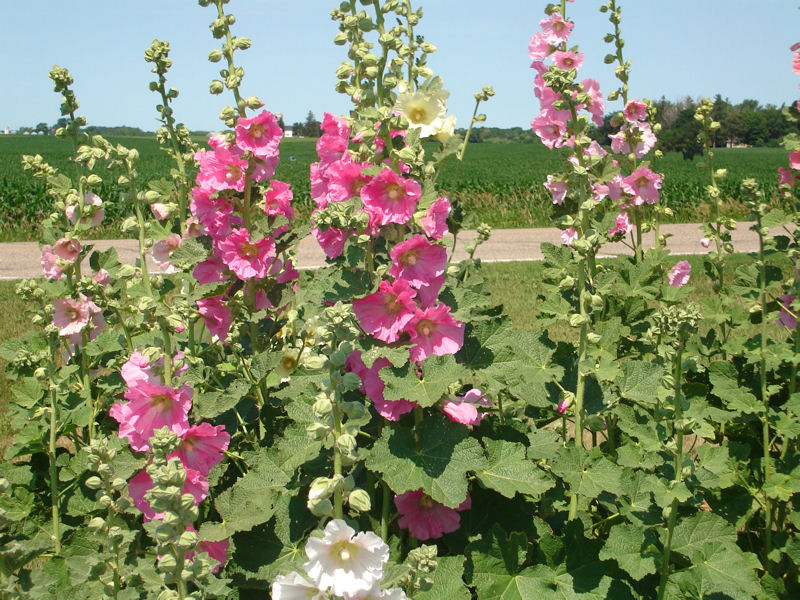
"Whenever he came out to the home place now, Grandpa had to get reacquainted with the yard of stunted oaks, marigold beds, the rusted car that had been his children’s playhouse and mine, the few hills of potatoes and stalks of rhubarb that Aurelia still grew. She worked nights, managing a bar, and couldn’t keep the place as nicely as Grandpa always had. Walking him slowly across the lawn, I sidestepped prickers. The hollyhocks were choked with pigweed, and the stones that lined the driveway, always painted white or blue, were flaking back to gray. So was the flat boulder under the clothesline—once my favorite cool place to sit doing nothing while the clothes dried, hiding me.
This land had been allotted to Grandpa’s mother, old Rushes Bear, who had married the original Kashpaw. When allotments were handed out all of her twelve children except the youngest—Nector and Eli—had been old enough to register for their own. But because there was no room for them in the North Dakota wheatlands, most were deeded parcels far off, in Montana, and had to move there or sell. The older children left, but the brothers still lived on opposite ends of Rushes Bear’s land.
She had let the government put Nector in school, but hidden Eli, the one she couldn’t part with, in the root cellar dug beneath her floor. In that way she gained a son on either side of the line. Nector came home from boarding school knowing white reading and writing, while Eli knew the woods. Now, these many years later, hard to tell why or how, my Great-uncle Eli was still sharp, while Grandpa’s mind had left us, gone wary and wild. When I walked with him I could feel how strange it was. His thoughts swam between us, hidden under rocks, disappearing in weeds, and I was fishing for them, dangling my own words like baits and lures.
I wanted him to tell me about things that happened before my time, things I’d been too young to understand. The politics for instance. What had gone on? He’d been an astute political dealer, people said, horse-trading with the government for bits and shreds. Somehow he’d gotten a school built, a factory too, and he’d kept the land from losing its special Indian status under that policy called termination. I wanted to know it all. I kept asking questions as we walked along, as if he’d take the hook by miracle and blurt the memory out right there.
“Remember how you testified . . . ? What was it like . . . the old schools . . . Washington . . . ?”
Elusive, pregnant with history, his thoughts finned off and vanished. The same color as water. Grandpa shook his head, remembering dates with no events to go with them, names without faces, things that happened out of place and time. Or at least it seemed that way to me."
Love Medicine, Louise Erdrich
(um trabalho de casa, aqui)
Tuesday, May 17, 2011
Erdrich
Advice to Myself
Louise Erdrich
Leave the dishes.
Let the celery rot in the bottom drawer of the refrigerator
and an earthen scum harden on the kitchen floor.
Leave the black crumbs in the bottom of the toaster.
Throw the cracked bowl out and don't patch the cup.
Don't patch anything. Don't mend. Buy safety pins.
Don't even sew on a button.
Let the wind have its way, then the earth
that invades as dust and then the dead
foaming up in gray rolls underneath the couch.
Talk to them. Tell them they are welcome.
Don't keep all the pieces of the puzzles
or the doll's tiny shoes in pairs, don't worry
who uses whose toothbrush or if anything
matches, at all.
Except one word to another. Or a thought.
Pursue the authentic-decide first
what is authentic,
then go after it with all your heart.
Your heart, that place
you don't even think of cleaning out.
That c loset stuffed with savage mementos.
Don't sort the paper clips from screws from saved baby teeth
or worry if we're all eating cereal for dinner
again. Don't answer the telephone, ever,
or weep over anything at all that breaks.
Pink molds will grow within those sealed cartons
in the refrigerator. Accept new forms of life
and talk to the dead
who drift in though the screened windows, who collect
patiently on the tops of food jars and books.
Recycle the mail, don't read it, don't read anything
except what destroys
the insulation between yourself and your experience
or what pulls down or what strikes at or what shatters
this ruse you call necessity.
- -