ah, o meu horóscopo é muito positivo. esperando que o vosso seja também.
no último dia do ano descobri que adoro o pão da lagoinha. no primeiro dia, que arroz de miúdos de cabrito é bem bom (mas não deve ser interrompido por telefonemas, ou melhor, deve ser interrompido por telefonemas).
"Well, well, well. You’ve made it to the last day of the year, Scorpio. And with a Full Moon in Cancer taking place January 1, this is an auspicious moment in your life where everything seems to be aligning in a beautiful way. You should feel proud of who you are in this moment. You have overcome countless challenges and bounced back, stronger and wiser than before. You will find yourself feeling immense gratitude as this year ends and another begins. Jupiter will be in Scorpio for 11 out of 12 months in 2018, making you the universal favorite, Scorpio. The only question you should ask yourself is how you’re going to make the most of this abundance and bliss entering your life. You deserve every bit and more. Choose to believe. Choose to accept. Choose to soar."
Monday, January 1, 2018
g'night

Sunday, December 20, 2015
far flung, Gary's naan bread
yummmmmm
Naan Bread:
3 cups (450g) plain flour
1 tsp sugar
1 tsp salt
1 cup (250 ml) warm water
1/3 cup (95 g) plain yoghurt
1½ tsp yeast
½ tsp baking powder
2 tbsp vegetable oil, plus extra to grease bench
¼ cup (60 g) melted ghee
½ tsp nigella seeds
Naan Bread - Makes 6
Place the flour, sugar and salt into a large bowl and stir to combine.
Mix the warm water and yoghurt together in a jug, then add the yeast and stir to combine.
Make a well in the flour and add the wet ingredients and the baking power. Stir to incorporate the ingredients into a soft, sticky dough.
Remove from the bowl onto a floured board and knead until smooth, the dough doesn’t need a lot of work. Place a dash of oil into the bowl and return the dough, smooth side up, cling wrap and leave in a warm place for 30-45 minutes.
Heat oven to 240°C - 250°C fan-forced and place 2 trays in the oven to heat.
Lift the dough gently from the bowl onto an oiled bench and cut dough into 6 wedges.
Gently pat and stretch the dough into triangles, 4mm - 5mm thick and sprinkle with nigella seeds.
Place the bread into a hot pan and cook on each side for about a minute, add a tsp of ghee and brush over the naan in the pan Cook until golden brown spots appear and the naan is cooked through.
Transfer to hot trays and cook in batches). Serve brushed with a little more ghee.
daqui.
Friday, June 6, 2014

Thursday, May 8, 2014
preço justo no cacém

Monday, April 21, 2014
bunz

Wednesday, April 16, 2014
Wednesday, April 9, 2014
Thursday, April 3, 2014
fórmula para pão, tirada da newsletter do autor da Bread Magazine
a revista paga-se, julgo, a newsletter não.
The Formula
As I already mentioned, to make great bread, all you need is four ingredients (three actually, but we'll get to that later): flour, water, leaven, and salt. Change the amount of salt too much and your bread is no longer edible, so most of the time we just play with the proportions between water and flour.
Let's start with an example: the most basic bread recipe of them all. To make the math as easy as possible, I am using 1000 grams of flour.
1000g bread flour
700g water
20g salt
20g fresh yeast
There you go. The most basic of bread formulas, a formula that already leads to a decent loaf of bread. Replace the yeast with some sourdough starter, or a pre-ferment, and you have great bread.
But now, the "magic": By replacing the weights by numbers known as bakers' percentage this formula becomes not just one formula, but the root for all formulas.
Here's the same formula from above, this time written using bakers' percentages instead of weights:
100% bread flour
70% water
2% fresh yeast
2% salt
See the logic yet?
Let me explain it to you: when using the bakers' percentage notation, every ingredient is presented as its proportion compared to the total amount of flour in the dough.
This is important so I'll repeat: a bakers' percentage is not your regular percentage. It's a number that tells how much of any ingredient is present in the dough, in relation to the amount of flour.
Now, the math.
Here's how I got from these percentages to the final formula: I first decided to use 1000g of flour. This means that 100% = 1000g. Had I used two different flours, they would together be 100% (for example 20% wholemeal flour and 80% bread flour).
Next, we can calculate the other ingredients:
70% of 1000g is 700g (in math speak: 1000 * 0.7 = 700)
2% of 1000g is 20g (1000 * 0.02 = 20)
And that's it!
We now have used the formula to create a basic bread recipe for a kilo of white flour. In the same way, if you wanted to use 500 grams of flour, you'd just use 350 grams of water (500 * 0.7) and 10 grams of salt and yeast (500 * 0.02).
This is how the bakers' percentage notation combines all these different recipes into one.
But this gets even more exciting!
So, let's look at one more term: the hydration level.
Hydration simply means the amount of water in a dough, and is presented in bakers' percentage.
In our example, the hydration is 70%, which — depending on the flour you use — can be just right or a little on the wet side.
I feel I should write more about this, but this really is it: Hydration means the amount of water in a dough.
Now, using these two tools (bakers' percentage and hydration level), we can describe the formula in just two numbers. Two numbers that you can store in your mind and use to bake bread without ever looking at another recipe again:
Formula for basic white loaf (simplified version):
70% hydration. 2% salt and yeast.
And as you bake more, the 2% for salt becomes second nature, and then you can just go with the one number: 70% hydration.
You will be saying things like: "Today, I made bread at 80% hydration. Using 20% wholemeal wheat."
And when another baker says his 100% hydration Ciabatta was a success, you'll know exactly what he means.
escrito por Jarkko, brilliant, I so love it.
se isto não é quase geometria descritiva...
Bread Magazine, aqui.
o pão
e a passagem à sedentariedade. gostava de saber mais sobre esta ligação.
"The importance of bread in the formation of early human societies cannot be overstated. From the western half of Asia, where wheat was domesticated, cultivation spread north and west, to Europe and North Africa, and enabled humans to become farmers rather than hunters and foragers. This in turn led to the formation of towns, as opposed to the nomadic lifestyle, and gave rise to more and more sophisticated forms of societal organization."
na wiki.

Wednesday, April 2, 2014

Sunday, November 10, 2013
provavelmente
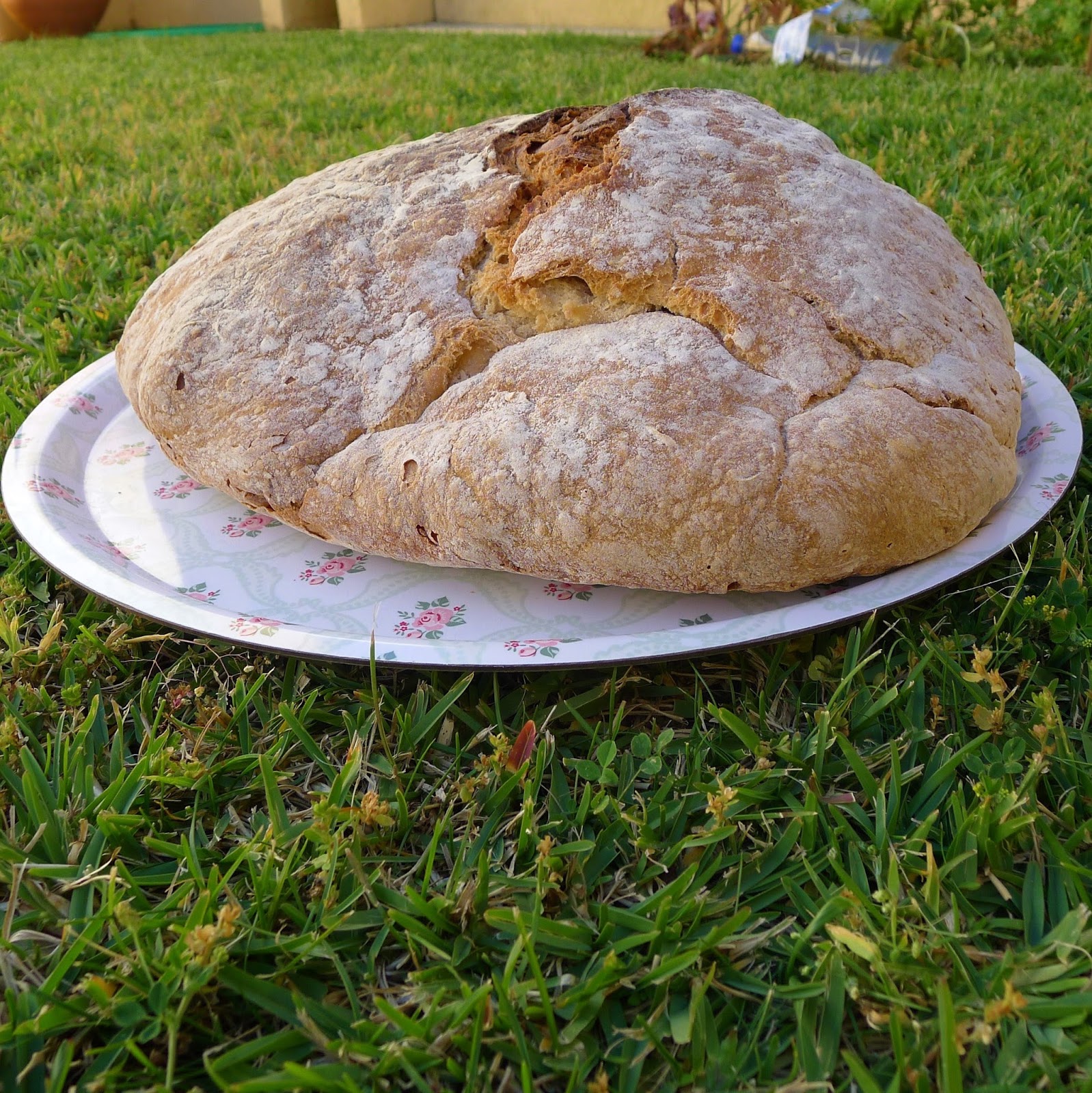
o melhor pão que já foi feito cá em casa, com nozes e pevides. 400g farinha, 100g farinha integral, 325ml água tépida, meia carteira de fermento seco, 1 cc chá sal. pode não parecer rocket science mas é. fiz com pedra no forno. acompanhar com manteiga boa e um chá especial de outono, e porque não: ferver um pouco, 5 minutos, a casca de uma maçã biológica (ou sem ceras ou outras porcarias) e um pau de canela. sendo a maçã vermelha, o chá de maçã e canela será um pouco rosa e tão bom.

Friday, April 26, 2013
mantı
as mulheres da suécia a fazer também o pão do final do verão para durar todo o inverno, as mulheres da anatólia em esforço comum a fazer manti (para ver): "Mantı is the name given to the little Turkish raviolis that come with yogurt or tomato sauce. Historically, the food is important because it was made en-masse by village women and dried on a balcony in the autumn sun to keep for the winter. The women would then proceed to the next family house and start the process over until each abode was well stocked with these nutritious preserved noodles." (daqui)
(bom, não só na Suécia, embora nos países nórdicos os longos invernos obrigassem a um mês de grande actividade entre as colheitas de cereais e o início do inverno. "Until the 20th century, bread-making was a communal activity. People, primarily women, would gather together, mix ingredients, talk about current events and, often, share a community oven to bake bread.", daqui)
Sunday, February 28, 2010
pão saloio
da pastelaria Matias em São João das Lampas. perfeitíssimo pão saloio, nada das imitações de quinta categoria dos hipermercados. fica no largo do coreto, ao lado da igreja e perto da antiga sociedade. para quem procura o verdadeiro, este é o local para parar. a história que ando a ler aos miúdos está aqui nesta meia dúzia de cadeiras da esplanada, embrulhada com o pão que foi moleiro que foi padeiro que foi fabricante e que passou recentemente na escola desembocando em pastelaria. aqui perto há muitos moinhos e há quem goste de olhar para eles em caminhadas. sem ser planície, as elevações são suaves e propícias a caminhantes e bicicletas.
Tuesday, November 3, 2009

Tuesday, October 6, 2009
pão espanhol
e tudo aqui afinal não passa de coleccionismo que me chegou por parte da mãe, ou empilhação por parte do pai. tudo aqui, todos os posts -vocabulário novo- todas as notas como se traduz algures. até porque na casa de pedra prefiro o despojamento.
este é o pão espanhol da Pastelaria Majestic, em Aveiro.


