I finished Kırmızı Saçlı Kadın in the most peculiar way, DB would say. I picked it up a few chapters after I had left it months ago and followed the narrative till the end, admittedly jumping a few lines of the last chapters that were re-read once I unveiled the resolution of the story. then, I went back to the chapters before the Iran voyage from the beginning of that section. And then read chapter by chapter back until the place where I had left, or at least where I remembered the words clearly. could the author ever intend it to be read this way. does the reader have this reading freedom, power over the story's facts?
returning themes: east-west, the missing woman who leaves a red trail, this time not a scarf but the memory of her hair, an obsession with an idea, the willingness to integrate or explain a nationalist religious youth, the outskirts of Istanbul and the growth of the urban areas, old narratives and disappearing traditional jobs, the new westernized rich of Nişantaşı and so on. totally new and something that I had yearned for: the Iranian view. finally the two worlds meet somewhere, I wish Pamuk could somehow meet Kiarostami, who knows. another novelty: describing a world I was a part of: I was actually there then; the mention of muhteşem yüzyıl, the tv show I watched blindly for so long, eagerly hearing each word and expression.
not as convoluted as other novels, or is it the translator? equally rich in quotes and authors and text. how I miss the city of dreams.
Sunday, February 11, 2018
ruiva

Monday, August 28, 2017
the elephant
"I teach comparative literature at Columbia University. At the start of every semester, if I plan to discuss one of my own novels in class, I always tell my new students an old story about writing and teaching.
It’s a very popular (but possibly apocryphal) anecdote about Vladimir Nabokov. In 1957, he was proposed for an appointment at Harvard University as professor of Russian literature. Not everyone welcomed the idea. “If Russian literature is to be taught by Russian greats,” the Harvard linguist Roman Jacobson reportedly told his colleagues, “then we must get elephants to teach at the faculty of zoology.”
My students laugh, and then I turn to the matter at hand. “This semester, I will stand before you as an elephant, but I will also try my best to be a professor.”
Elephants don’t know what it is that makes them elephants. They just are. Similarly, novelists do not consciously dwell on what they do when they write their novels. The things they mean to describe and express when they write, the territory they wish to cover, may be very different from those elements that readers and students focus on. The author of a novel is not always the best placed to interpret it, and eventually others may become more familiar with the text than he is.
Most of my bright students at Columbia are fully aware of these paradoxes, so I don’t have to spend too much time on the subject, though I do later occasionally warn them: “I am going to speak now not in my capacity as a professor, but as the elephant in the classroom.”
I may explain, for example, that one of the reasons I wrote “My Name Is Red” is that until the age of 22, I wanted to be a painter, but failed.
“With this novel,” I say, “I tried to construct a narrative inspired by the contrast between what a painter envisions, and the way his hand can sometimes move of its own accord.”
Then the professor steps in: “That contrast is similar to the difference between being a novelist and being a professor teaching the art of the novel.” Which leads to the question of what John Berger, himself a novelist, terms “ways of seeing,” and then to the East-West dichotomy, Persian miniatures, Renaissance art and history.
Or about another of my novels, “Snow,” I may say: “As the elephant in the classroom, I can tell you that everything that happens to the protagonist Ka over the first 200 pages is almost exactly what I experienced myself when I went to the Turkish city of Kars, in 1999, where the book is set. I wanted to write a political novel that would contain an entire nation, just like Graham Greene’s novels set in poor and troubled third-world countries.”
Though I try to resist the temptation, I have been inclined in class — even more so than my students — to see my own “novels of a nation” as introductions to the cultural norms and particular afflictions of Turkey, the Middle East and the entire Muslim world. Because I am interested in “theory” and the field called cultural studies, I sometimes end up “theorizing” about my own work.
“In this passage, our author is aiming to explore the history of the streets and shops of Istanbul.”
Or: “In Islamic societies, where men and women rarely get to interact unless they are already married, boys and girls will develop an alternative language with its own special grammar of silent glances, frowns, moments of deliberate immobility and pointed questions: ‘Would you like another meatball?’ ”
But how much emphasis should I place on Turkish history, the transformation of Istanbul, or Islam and secularism, so that the logic of my novels will be more accessible to my students? After a lifetime spent battling against political pressures on literature, devoting classroom time to social context or political ironies instead of literary nuances makes me feel like a traitor. Whether I am teaching my own novels, or “Anna Karenina,” “Mrs. Dalloway” and “The Red and the Black,” I sometimes feel that no matter what I do, I am actually betraying true literature — a feeling that stays with me like a kind of heartache.
Ten years of teaching experience have shown me that the best way to avoid these anxieties and contradictions is to steer away from theory and social context and re-discover the intricacies of the text itself with my students — be it my own work or someone else’s. So at the start of every class, I devote some time to poring over the pages I’ve assigned for that day.
“Let’s analyze what’s been happening here,” I’ll say. “Why do you think Ka is arranging the meeting at the Hotel Asia?” “What key events from this section should we discuss?” “What do you think is the dominant mood in these pages?”
Like most educated upper-middle-class Turkish men, I have an authoritarian streak in me, and even though I enjoy teaching through dialogue, I can’t always resist just telling students the “facts” about my novels. And yet I also marvel at a student reminding me of the oddities of a novel I’d written years ago, and wonder if I’d even meant any of it.
Whenever I set theory and social context aside in favor of a “close reading” of novels, seeking out their subtleties and internal symmetries, I discover just how much I have forgotten about my own books. One day, just before class was due to start, a student saw me frantically skimming through “Snow” outside the classroom. “That’s what happens if you don’t bother to do your reading!” he joked.
He had that teasing, mischievous expression I sometimes see on students when they spot little things in my novels that I hadn’t even realized I was doing, or when they don’t agree with what I say is the logic of a novel and point out its contradictions and ambiguities. But after years of giving lectures on my own work, my students have taught me to think this comforting thought whenever I catch that expression on their faces: “Maybe they’d rather have an elephant in the classroom than a professor.”
no LA Times.
Sunday, August 20, 2017
A.'s back
nine books and one of them is Cevdet Bey, the one I refused to read for being a first work, consequently when the voice is not yet fully developed. but I recognize it, it's all there already.
Monday, April 3, 2017
Saturday, November 19, 2016
light
"Before my birth there was infinite time, and after my death, inexhaustible time. I never thought of it before: I'd been living luminously between two eternities of darkness."
Pamuk
"We live in the flicker."
Conrad
Thursday, November 17, 2016
Hafif hafif
"Hafif hafif ağlamaya başlamıştı. Nasıl oldu hiçbir zaman tam hatırlayamadım, ona sarıldım." -Kemal Basmacı, 6. Bölüm
no Museum of Innocence, Pamuk.
Friday, August 5, 2016
or woman
What better can we do to our brains than language, that elastic, infinite, pliable, transient, endless thing. As history remembers the first man who did this and that, it'll never remeber the first man who first uttered a word and then changed it. Just a little bit.
atrasei-me um pouco na melancolia, é preciso adiantar o passo.
- -
the politics of domination, capitalism and the theft of heritage.
"Reading Leonor’s post on the José Saramago Archive prompts me to reflect on its wider implications. The first thing to say is that it is splendid news that the Saramago Archive is going to find a devoted and fitting home in Lisbon, amongst all the landmarks celebrated in books like ‘The history of the siege of Lisbon’.
The fact that the papers of one of the truly great novelists of the twentieth century should end up in Portugal, without a big purchasing battle, gives cause to reflect especially on questions of “language and location”. The work presently underway on Diasporic Literary Archives (see an earlier post on this blog) now indicates that there are really only four countries which regularly and actively collect the papers of writers from other countries. These are the USA, the UK, Canada and France. And none of those countries has any significant tradition of studying Portuguese language or literature."
from here.
So that it be known: the raiders of other's treasures. Was it ever a surprise?
I'm sorry Turks (wink), this is the way it is.
"Excellent news about Saramago then. What does it tell us when we think about the manuscripts of the other great novelists of the last part of the twentieth century? My own list would start with Saramago and would always include Margaret Atwood, Samuel Beckett, Carlos Fuentes, Gabriel Garcia Marquez, Elfriede Jelinek, Doris Lessing, Naguib Mahfouz and Orhan Pamuk. That personal list provides some interesting stories and some telling controversies from the world of modern literary manuscripts."
(Ooh, one I have no clue about, exciting!)
Yes. (and I thank him every day for my hobby of already 4 years, Turkiye).
"Given that there is almost no interest in Turkish language and literature in the four big purchasing countries, there is every chance that the Orhan Pamuk Archive will stay in Istanbul, where it so obviously belongs. It could be said that Pamuk is to Istanbul what Saramago is to Lisbon and Mahfouz to Cairo."
and finally:
"That leaves Gabriel García Márquez. He is clearly a highly marketable author-commodity, and Spanish-language manuscripts are actively collected in the USA, not only by Princeton. In November 2012, the first García Márquez manuscript to go on sale was auctioned at Christie’s, with a price guide between $80,000 and $127,000. I don’t know what arrangements García Márquez may have written into his will (does anyone?), but it certainly seems unlikely that the main García Márquez Archive will end up in his native Colombia.
It is clear, in conclusion, that the language used by an author is a major factor in the eventual destination of their literary archive."
ou dito de outro modo; ainda bem que os assambarcadores daqueles quatro países são um pouco, digamos, cegos.
Saturday, July 30, 2016
the life of women
the lady at the bookstore told me that Ali and Ramazan is a difficult book to find and for that reason she charged me an extra 2 euros for it. it's alright, I was so curious to read it although I was totally mislead, not only about the author's general themes and concerns but also and mostly about the story. saying it is a story about two teenagers doesn't even come close to the shocking tale of abuse and violence wrapped by a gay somewhat love story.
the next book was by Ayşe Kulin, Face to Face or Bir Gün, that starts with an astounding first chapter. the book develops in a sort of educational way for citydwellers about both the beauty and the pain of being a Kurd. it is enlightning in many ways but, hey, I come with Yaşar Kemal in my eyes. the woman theme, as well as the class theme, in Ali and Ramazan kept me going for a few days. a man and a woman cannot touch, whatever happens, whatever they say to each other. could we ever even understand each other (east and west) when so often conversation comes after touching. and I'm not even referring to the kurdish lifestyle portrayed in the book. in every single book, the female characters who don't follow the expectation of forever are punished somehow in the course of the story. (poor Füsun, poor Sibel) despite the contents musings (writing with a purpose, hence out of my range), light literature.

Wednesday, July 20, 2016
demokrasi
"I want to clearly say that military coups are never a solution for the problems of Turkey.
For so many different reason, I am critical of the clashes of the current government of the AKP. In the course of my life, I have been a witness to three military coups that succeeded and four that failed. All those have made the problems of Turkey bigger and the people more unsatisfied.
I am not glad that the opposition parties have spoken agains the coup right from the begining. Because the future of Turkey is in full democracy."
Pamuk
Wednesday, June 8, 2016
twitter'de: "Masumiyet Müzesi romanında sizin en sevdiğiniz alıntı hangisi?"
en sevdiğim: “Hayatımın en mutlu anıymış, bilmiyordum.”
first time I see the original sentence.
(#MasumiyetMzesi)
Sunday, June 5, 2016
Saramago okuyorum
"Saramago’yu okuyorum, çünkü yazdıklarını önemli buluyorum. Portekiz tarihine olan ilgisini, olayları evrensel bir boyuta taşımasını, politik duruşunu, insanın en temel sorularından “Ben kimim?” sorusunu ele alışını, Nobel ödülü almış olmasını, hayatının son anına kadar yazma gayreti içinde olmasını, dine karşı sorgulayıcı tavrını önemsiyorum Saramago’nun. Her okuduğumda aynı soruları kendime sorabiliyorum, alaycı dilinde hoş bir tat buluyorum Saramago’nun. Belirli açılardan da Orhan Pamuk’a benzetiyorum onu. Kitaplarının ele aldığı konular, kendi ülkesi ve tarihine yaklaşımı, romanın arka plandaki düşünceleri benzese de çok bakımdan ayrılıyor da Pamuk’tan. Zaten bu, üzerine gidilebilecek, daha derine inilebilecek bir benzerlik filan da değil, daha çok bir hissiyat. Ez cümle, bu kısa yazıda şunu demek istedim: Eğer Saramago okumaya halen başlamadıysanız, yukarıda saydığım kitaplardan en azından birisini okuma listenize almanızı naçizane tavsiye ederim…"
buradan,
Sunday, May 15, 2016
'keep going'
Not too long after the film Mustang was released in Turkey last October, its director and co-writer, Deniz Gamze Ergüven, was interviewed by the Nobel prize-winning writer Orhan Pamuk. “He was curious about how I’d lived through its reception,” she says, with a characteristically wide-eyed smile. “Well, I was gloomy. I explained how I’d been attacked. I’d had some very aggressive, negative critiques there [in Turkey], the kind of thing I hadn’t received anywhere else. So I loved his response. First of all, he said that lots of people around him had seen it, and liked it. Then he said: ‘But you will be attacked.’ And he explained why. After all, he knows: he’s had plenty of violent criticism himself. ‘Don’t get depressed,’ he told me. What he was saying was: keep going.”
from the Guardian, here. I can't wait to see Mustang.
Thursday, May 5, 2016
Yol, Yılmaz Güney
and an Homage to Yilmaz Güney that won the Palme d'Or for Switzerland when Turkey was under military rule. o que provavelmente não diz muito mas não é necessário saber muito sobre a história contemporânea daquele país para saber quais as consequências de uma ditadura militar para a liberdade de expressão. duro e realista: a história de cinco homens presos e que recebem uma licença de uma semana para ir a casa. o inferno quando existe acompanha-nos.
falar neste filme ficando pelo historial político ou fazendo um resumo das histórias que "conta" é quase nem chegar a entrar na sala do cinema. um realismo brutal visto à queima roupa, uma visão muito poética mas cruel, o mesmo inferno na terra que encontrei em Hikmet mas sobretudo em Yasar Kemal.
Tuesday, May 3, 2016
Murat Belge
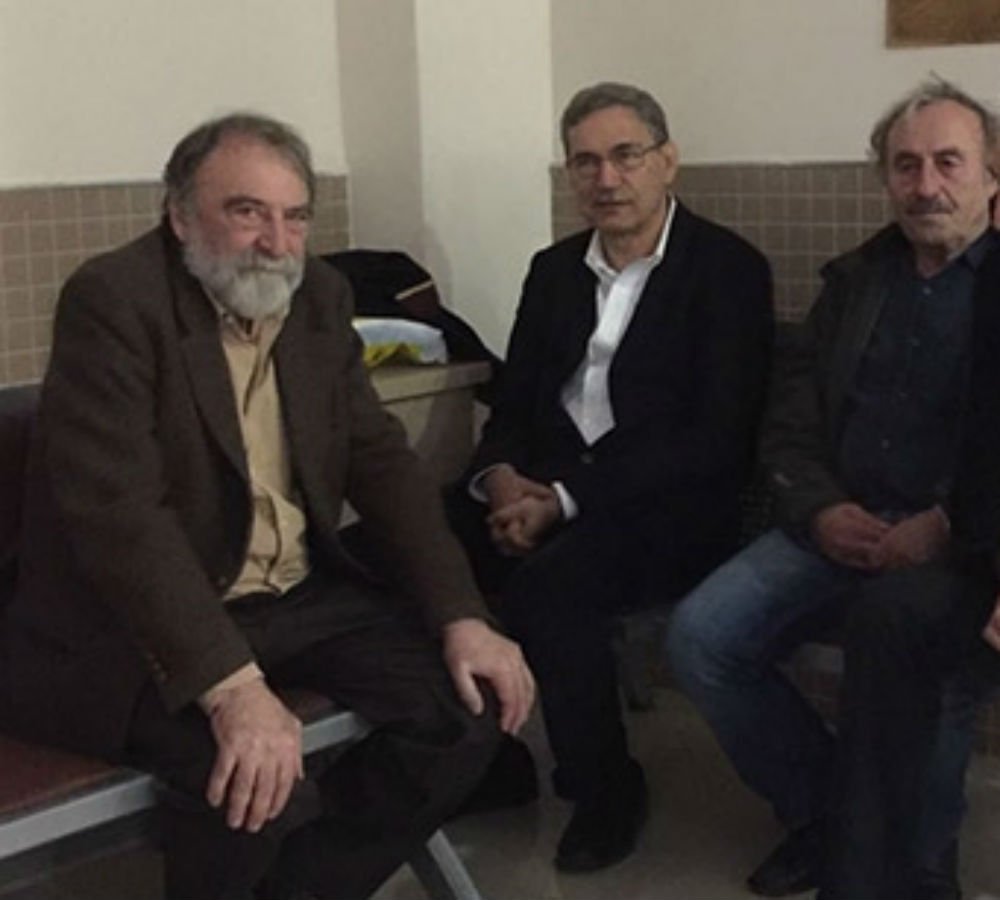
the journalist Murat Belge has joined a large group of peope who are facing criminal trial and jail for insulting the President. Turkey therefore becomes a world freak by arresting those who insult a President.
"In the meantime, Nobel laureate novelist Orhan Pamuk was among those who followed Belge’s trial on Tuesday. Pamuk said he attended the trial to give support to Belge, adding that he has been reading Belge’s articles for 50 years, learned much from him and never witnessed his using an insulting language in his articles. The novelist said the insult charges directed against Belge and thousands of other people actually aim to silence independent thinking and intimidate government critics."
why are Europeans dealing with this rogue government? there is no such thing as "Europe" anymore, that's why.
Friday, March 25, 2016
Thursday, March 10, 2016
Monday, February 22, 2016


Sunday, February 14, 2016
"İlk aşk deneyimi bütün bir hayatı belirler mi? Yoksa kaderimizi çizen tarihin ve efsanelerin gücü müdür yalnızca?" (Pamuk)
saiu na terça-feira o último livro do autor que vai estar hoje a dar autógrafos numa livraria de İstanbul, the read haired woman, a mulher de cabelo vermelho ou a ruiva, o que faz o título perder duas palavras; muito. bem gostaria de traduzir dolorosamente, cada frase uma meia hora, mas por enquanto digerem-se as reviews que serão muitas nestes dias. é possível mudar o seu destino, é possível que algum momento faça desviar o curso do tempo; ou este já estava definido há muito? as duas coisas, não será?
depois de Mevlut, o herói gentil dos 'dispossessed', o que deu a voz aos sem-voz (uma voz literal e sem ideologia) fez restar horas de entrevistas feitas na cidade. destas horas sobraram minutos para as agora 200 páginas que misturam o homem que abre poços de água com o enredo literário da história. cavar fundo na terra em busca de água, viajar fundo no tempo para encontrar as raízes e as razões de ser. de novo: é possível mudar o seu destino ou ele é apenas o jorrar da água empurrada pelas camadas de passado dos que nos precederam na cadeia do tempo?
Thursday, February 11, 2016
from another hill
Ahhh .ahhh
Sana dün bir tepeden baktim aziz istanbul
Görmedim gezmedigim sevmedigim hiç bir yer
Ömrüm oldukça gönül tahtima keyfince kurul
Sade bir semtini sevmekbile bir ömre deger
Sade bir semtini sevmekbile bir ömre deger
Nice revnakli sehirler görünür dünyada
Lakin efsunlu güzellikleri sensin yaratan
Yasamisdir derim en hos ve uzun rüyada
Sende çok yil yasayan, sende ölen, sende yatan
Sende çok yil yasayan, sende ölen, sende yatan
Ahhh. ahhh . ahhh
Sana dün bir tepeden baktim aziz istanbul
Aziz istanbul
- -
From Another Hill
I looked at you from another hill, dear Istanbul!
I know you like back of my hand, and love you dearly.
Come, come and sit on my heart's throne as long as I live
Just to love a district of yours is worth a whole life.
There are many flourishing cities in the world.
But you're the only one who creates enchanting beauty.
I say, he who has lived happily, in the longest dream,
Is he who spent his life in you, died in you, and was buried in you.
Yahya Kemal Beyatli
Tuesday, February 2, 2016
soon will trouble go his way, Pamuk ------pay-per-refugee
''I am one of those who always advocated to speak solely about literature,'' he told the Hürriyet daily over the weekend.
''But it is no longer possible. Because one can't."
Speaking about the demonization and purge campaign against more than 1,000 academics who had signed a petition calling for a return to the peace table, Pamuk said:
'The rude, insensitive behavior against the scholars are things that I can't saturate. If you mistreat these people in such a bad manner, they will simply emigrate. Is it easy, they think, to raise such scholars? What do these [rulers] want? Should we feel proud of living in a country where all the dissidents are thrown out of its borders?''
"People in democratic countries are not under any obligation to repeat like parrots the ideas that belong to those elected to power. This [fact] is what makes democracy a democracy: One shall not fear of the other who disagrees with you. But, if you start to think that 'oh my, now this person who I disagree with came to power, what will happen now?' -- then that place starts ceasing to be democratic."
"The biggest problem [in Turkey] is freedom of thought, and especially freedom for journalists to engage in political commentary," he continued. Dramatically, he compared the current political situation in Turkey to that of the Soviet Union under Stalin, describing the smear campaigns and character assassinations as such:
"There has been a huge attack on political commentators. The government is operating through the newspapers."
But Pamuk also does the right thing by not stopping there. He then turns his eye to Europe, and joins all us pundits, who for months have been issuing warnings about a principled stand for democracy, and nothing but democracy.
"[The EU] will turn a blind eye to the human rights violations and jailing of journalists [in Turkey]," said Pamuk, adding that the fact the EU turned a blind eye to the human rights violations committed by the AKP government to secure the refugee deal means that Europe had "lost all of its values" and is eclipsed by the mindset: "If they do what we want, then they can very well do whatever they want."
And what has happened with the most basic rights and freedoms till now is clear enough to add to Pamuk's statements. What seems to be turning into cynical horse-trading over the amount of money to bring down the refugee flow onto EU soil is surely being read as a carte-blanche by those in power, giving them free reign for more oppression.
artigo daqui.


