Full fathom five thy father lies;
Of his bones are coral made;
Those are pearls that were his eyes:
Shakespeare.
no Ulysses, no Waste Land e em Pollock.
porque nunca posso escrever pearls sem me lembrar deste verso.
Showing posts with label T.S. Eliot. Show all posts
Showing posts with label T.S. Eliot. Show all posts
Monday, September 29, 2014
Full fathom five thy father lies; / Of his bones are coral made; / Those are pearls that were his eyes:

Wednesday, September 10, 2014
stairhead
or Joyce's tower agora parte do complexo de museus Joyce e das comemorações do bloomsday e da oferta turística da cidade. na altura alugada por Joyce e colegas de universidade para 'helenizar' a Irlanda.

a história das torres de Martello também é interessante mas não sei qual a sua eficácia, para além de terem ajudado a gerar um primeiro capítulo tão estrondoso para a literatura universal. a arquitectura da construção original é genovesa, senhores temporários dos mares. uma certa torre na Córsega resistiu aos ingleses durante dois dias, o que os inspirou a construir um grande número de torres deste tipo no seu país e pelo império fora, sobretudo durante o terror napoleónico (um pouco como são francisco a construir estranhas formas defensivas à espera dos japoneses, assim o reino unido a guardar-se de napoleão). a cópia da cópia chegou aos estados unidos com desenho alterado e utilidade muito limitada.
as torres foram derrotadas não pelos inimigos imaginados mas pela tecnologia e ciência próprias (Sebald). no entanto, a simbologia da torre já me fascina desde que aprendi a ler o tarot e fazia sessões de leitura vagamente literárias no chão da sala para um grupo de amigos em maior ou menor estado de estupor (poético, digamos).
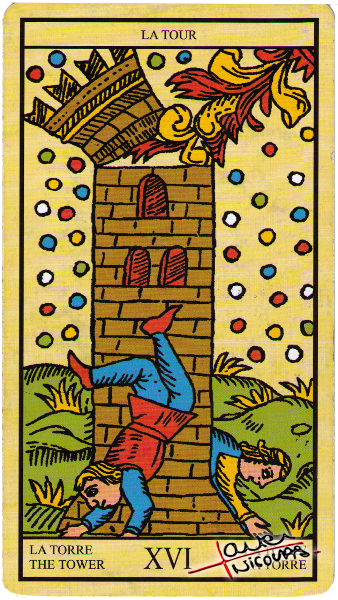
culpa de la tour abolie no El Desdichado de Nerval.
Je suis le Ténébreux, – le Veuf, – l’Inconsolé,
Le Prince d’Aquitaine à la Tour abolie :
Ma seule Etoile est morte, – et mon luth constellé
Porte le Soleil noir de la Mélancolie.
Dans la nuit du Tombeau, Toi qui m’as consolé,
Rends-moi le Pausilippe et la mer d’Italie,
La fleur qui plaisait tant à mon coeur désolé,
Et la treille où le Pampre à la Rose s’allie.
Suis-je Amour ou Phébus ?… Lusignan ou Biron ?
Mon front est rouge encor du baiser de la Reine ;
J’ai rêvé dans la Grotte où nage la sirène…
Et j’ai deux fois vainqueur traversé l’Achéron :
Modulant tour à tour sur la lyre d’Orphée
Les soupirs de la Sainte et les cris de la Fée.
- -
com tradução e notas.
- -
[coisas tão divertidas que até doem: o jogo a que o dito-jornal Público chama um 'produto cultural' é o mais caro de sempre, 500 milhões de dólares. blablabla aliens, 'luta para manter a paz', blablabla, terra em perigo, blabla. o dinheirinho não servia para coisas melhores, pois não.]
Sunday, July 27, 2014
"Memory and desire, stirring"...
"O guarda-livros Faldini tem cara de quem toda a vida escreveu cartas para países distantes a olhar para uma paisagem de gruas e contentores pela janela." Tabucchi em O fio do horizonte.
Thursday, February 27, 2014
homens-bomba
de que me lembrei quando li Rui Manuel Amaral esta manhã-
Unreal City,
Under the brown fog of a winter dawn,
A crowd flowed over London Bridge, so many,
I had not thought death had undone so many.
Sighs, short and infrequent, were exhaled,
And each man fixed his eyes before his feet.
Flowed up the hill and down King William Street,
To where Saint Mary Woolnoth kept the hours
With a dead sound on the final stroke of nine.
There I saw one I knew, and stopped him, crying “Stetson!
You who were with me in the ships at Mylae!
That corpse you planted last year in your garden,
Has it begun to sprout? Will it bloom this year?
Or has the sudden frost disturbed its bed?
Oh keep the Dog far hence, that’s friend to men,
Or with his nails he’ll dig it up again!
You! hypocrite lecteur!—mon semblable,—mon frère!"
Waste land.
muito provavelmente contra a sua vontade.
Sunday, July 21, 2013
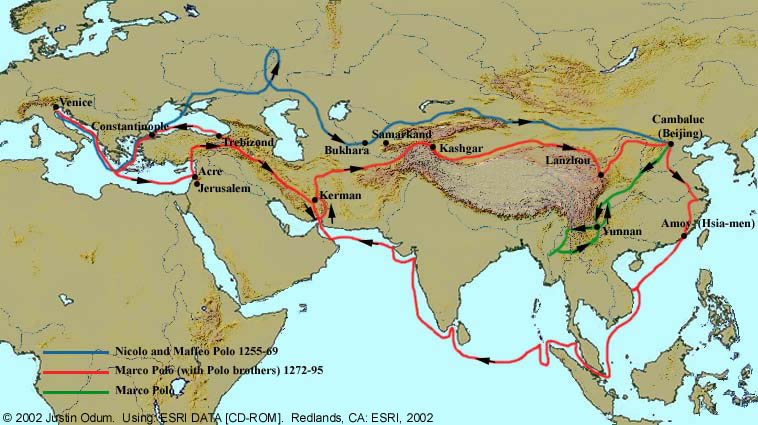
Samarcanda:

and.
acabada a Granta, um franchise português de uma revista britânica que tinha, até agora que decidiu tornar-se marca, um passado respeitável. a versão portuguesa faz aquilo que se espera dela: um inédito de um autor português importante, Pessoa (benditos inéditos que se adaptam assim à necessidade de novidade dos mercados), dois grandes autores publicados na Granta inglesa, Pamuk [em ansiedade de separação] e Bellow, e Simon Gray e Kapuściński. uma série de portugueses de hoje (gostei de Afonso Cruz e fiquei a pensar que Walter Hugo Mãe afinal até podia escrever) e uma tradicional, Hélia Correia. as imagens de Blaufuks dificilmente serão ultrapassadas. --valeu a pena, ainda assim, espero o número dois (Tu?). onde é que estava o Eu? muitas das narrativas são auto-biográficas, se bem que 'uma bíblia capaz de cruzar sem inibições o novo testamento do jornalismo com o antigo testamento da literatura' é um programa que me desagrada profundamente. até porque bíblia há só uma e porque a literatura não é a versão antiga de nada. mas fica o balanço e este é positivo. long live.
Thursday, July 4, 2013
'Words, Pictures, Objects'
I can't event start to express the pleasure I got out of reading the chapter 'Words, Pictures, Objects'. e não sei se o podia ter lido em qualquer outro ponto da vida, o que torna a leitura um pouco incómoda: quem sou eu, aqui, (ou, quem somos nós, aqui, pois eu é sempre nós, um eu sem significado) neste momento, depois de ver e ouvir e saber tudo isto, depois de Morsi ter caído com novo golpe de estado, depois de um arrufo de quatro milhões, depois de ter vivido sob t.s. eliot muito tempo, depois de sebald, depois da obra quase completa deste autor, depois de muitas outras conclusões que não são para aqui chamadas, depois de ashbery e do escudo de aquiles, depois do incrivelmente poético black elk speaks, depois da p.i. ter ido embora, depois de brit bass, depois do prado, depois dos sons da praia de eastbourne, depois de morrer saramago, depois de alexandra, depois de afonso cruz, etc.
para o mal dos direitos da cópia, terei de o trazer para aqui. este final que sei que não o é, mas o iniciar de outra coisa, ou um desvio grande.
esta é a cara de Anna Karenina que foi pintada dez anos depois da publicação do livro.

Tuesday, April 16, 2013
"Who is the third who walks always beside you?"
"Who is the third who walks always beside you?
When I count, there are only you and I together
But when I look ahead up the white road
There is always another one walking beside you
Gliding wrapt in a brown mantle, hooded
I do not know whether a man or a woman
—But who is that on the other side of you?"
em The Waste Land. provavelmente e, apesar de tudo o que rodeia Eliot, o meu livro de todos os tempos, talvez aquele que li mais vezes, aquele que quase sei de cor. nem tem a ver com Eliot com quem posso envolver-me em discussões unilaterais por vezes agressivas, mas com as palavras e com o que elas foram em certa altura da minha leitura. talvez quem as tenha lido na mesma altura que eu tenha um sentimento semelhante e não se tenha deixado abafar (a si, pessoalmente, a sua leitura intransmissível, o seu momento de leitura no tempo) pela piada e pelo escárnio que a pop e o pós-modernismo verteram em cima do conservador Eliot, apesar de merecido, afinal.
aqui a leitura oficial das aulas de literatura, com recurso à auto-referência e à referência literária mais básica, o livro dos livros. este outro foi sempre para mim duas coisas, o outro que não sou eu, o do lado de fora, e os ausentes que fazem parte de mim, vivos, mortos, longe, passados, o mundo dos espectros que cresce com os anos.
o outro do lado de fora é um dos temas recorrentes de Pamuk, bem como a identidade (talvez mais em White Castle, em que debateu talvez mais os seus fantasmas pessoais de reconciliação com a sua própria história de fronteira e de desejo. gosto deste tema, de olhar para ele a partir de várias origens, da exclusão, da narrativa que se usa para excluir os outros (estranhos, ameaçadores, o árabe), da fronteira, da possibilidade de diálogo, da cegueira, da identidade.
aqui, Pamuk numa breve homenagem a outros literários:
"The novelist will also know that thinking about this other whom everyone knows and believes to be his opposite will help to liberate him from the confines of his own persona. The history of the novel is the history of human liberation: by putting ourselves in other’s shoes, by using our imaginations to free ourselves from our own identities, we are able to set ourselves free.
So Defoe’s great novel conjures up not just Robinson Crusoe but also his slave, Friday. As powerfully as Don Quixote conjures up a knight who lives in the world of books, it also conjures up his servant Sancho Pancho. I enjoy reading Anna Karenina, Tolstoy’s most brilliant novel, as a happily married man’s attempt to imagine a woman who destroys her unhappy marriage, and then herself. Tolstoy’s inspiration was another male novelist who, though he himself never married, found his way into the mind of the discontented Madame Bovary. In the greatest allegorical classic of all time, Moby Dick, Melville explores the fears gripping the America of his day – and particularly its fear of alien cultures – through the intermediary of the white whale. Those of us who come to know the world through books cannot think of the American South without also thinking of the blacks in Faulkner’s novels. In the same way, we might feel that a German novelist who wishes to speak to all of Germany, and who fails, explicitly or implicitly, to imagine the country’s Turks along with the unease they cause, is somehow lacking. Likewise, a Turkish novelist who fails to imagine the Kurds and other minorities, and who neglects to illuminate the black spots in his country’s unspoken history, will, in my view, produce work that has a hole at its centre."
em "In Kars and Frankfurt", em Other Colors.
- -
por falar nos grandes criadores de 'outros': it can happen anywhere (not really) ou a frase do momento "Investigators warned police to be on the lookout for a "darker-skinned or black male" with a possible foreign accent" (...)
Monday, February 28, 2011
Liceu
Parsifal em directo do teatro Liceu de Barcelona, que soube através do Valkirio (obrigada!)
co-produção Gran Teatre del Liceu/Opernhaus de Zuric. com Klaus Florian Vogt, Anja Kampe, Alan Held, Hans-Peter König, Christopher Ventris, Evelyn Herlitzius, Boaz Daniel, Eric Halfvarson e outros. direcção musical de Michael Boder.
Parsifal
Paul Verlaine
Parsifal a vaincu les Filles, leur gentil
Babil et la luxure amusante - et sa pente
Vers la Chair de garçon vierge que cela tente
D'aimer les seins légers et ce gentil babil;
Il vaincu la Femme belle, au cœur subtil,
Étalant ses bras frais et sa gorge excitante;
Il a vaincu l'Enfer et rentre sous sa tente
Avec un lourd trophée à son bras puéril,
Avec la lance qui perça le Flanc suprême!
Il a guéri le roi, le voici roi lui-même,
Et prêtre du très saint Trésor essentiel.
En robe d'or il adore, gloire et symbole,
Le vase pur où resplendit le Sang réel.
- Et, ô ces voix d'enfants chantant dans la coupole!
- -
"And O those children’s voices singing in the dome”
Eliot rebuscando em The Waste Land.
a tradução, daqui:
Parsifal has vanquished the daughters, with their gentle
Babble and amusing luxuriance; despite delight
Of the flesh that lures the virgin youth, tempts him
To love their swelling breasts and gentle babble;
He has vanquished fair Womankind, of subtle heart,
Her tender arms outstretched and her throat pale;
From harrowing Hell, he now returns triumphant,
Bearing a heavy trophy in his boyish hands,
With the spear that pierced the Saviour's side!
He healed the King, and shall be himself enthroned,
As priest-king of the sacred, vital treasures.
In robe of gold he worships that sign of grace,
The unblemished vessel in which shines the Holy Blood.
-And, o those children's voices singing in the dome!
- -
erradamente Fal Parsi, pure fool.
Thursday, December 16, 2010
Tuesday, June 1, 2010
"la tour abolie"
uma porta de Waste Land, subterrâneo, la tour abolie no El Desdichado de Nerval. também de poetica.fr.
El Desdichado
Gérard de Nerval
Je suis le Ténébreux, - le Veuf, - l’Inconsolé,
Le Prince d’Aquitaine à la Tour abolie :
Ma seule Etoile est morte, - et mon luth constellé
Porte le Soleil noir de la Mélancolie.
Dans la nuit du Tombeau, Toi qui m’as consolé,
Rends-moi le Pausilippe et la mer d’Italie,
La fleur qui plaisait tant à mon coeur désolé,
Et la treille où le Pampre à la Rose s’allie.
Suis-je Amour ou Phébus ?… Lusignan ou Biron ?
Mon front est rouge encor du baiser de la Reine ;
J’ai rêvé dans la Grotte où nage la sirène…
Et j’ai deux fois vainqueur traversé l’Achéron :
Modulant tour à tour sur la lyre d’Orphée
Les soupirs de la Sainte et les cris de la Fée.
Monday, May 31, 2010
the love song
The Love Song of J. Alfred Prufrock
T.S. Eliot
S’io credesse che mia risposta fosse
A persona che mai tornasse al mondo,
Questa fiamma staria senza piu scosse.
Ma perciocche giammai di questo fondo
Non torno vivo alcun, s’i’odo il vero,
Senza tema d’infamia ti rispondo.
LET us go then, you and I,
When the evening is spread out against the sky
Like a patient etherised upon a table;
Let us go, through certain half-deserted streets,
The muttering retreats
Of restless nights in one-night cheap hotels
And sawdust restaurants with oyster-shells:
Streets that follow like a tedious argument
Of insidious intent
To lead you to an overwhelming question …
Oh, do not ask, “What is it?”
Let us go and make our visit.
In the room the women come and go
Talking of Michelangelo.
The yellow fog that rubs its back upon the window-panes,
The yellow smoke that rubs its muzzle on the window-panes
Licked its tongue into the corners of the evening,
Lingered upon the pools that stand in drains,
Let fall upon its back the soot that falls from chimneys,
Slipped by the terrace, made a sudden leap,
And seeing that it was a soft October night,
Curled once about the house, and fell asleep.
And indeed there will be time
For the yellow smoke that slides along the street,
Rubbing its back upon the window-panes;
There will be time, there will be time
To prepare a face to meet the faces that you meet;
There will be time to murder and create,
And time for all the works and days of hands
That lift and drop a question on your plate;
Time for you and time for me,
And time yet for a hundred indecisions,
And for a hundred visions and revisions,
Before the taking of a toast and tea.
In the room the women come and go
Talking of Michelangelo.
And indeed there will be time
To wonder, “Do I dare?” and, “Do I dare?”
Time to turn back and descend the stair,
With a bald spot in the middle of my hair—
[They will say: “How his hair is growing thin!”]
My morning coat, my collar mounting firmly to the chin,
My necktie rich and modest, but asserted by a simple pin—
[They will say: “But how his arms and legs are thin!”]
Do I dare
Disturb the universe?
In a minute there is time
For decisions and revisions which a minute will reverse.
For I have known them all already, known them all:—
Have known the evenings, mornings, afternoons,
I have measured out my life with coffee spoons;
I know the voices dying with a dying fall
Beneath the music from a farther room.
So how should I presume?
And I have known the eyes already, known them all—
The eyes that fix you in a formulated phrase,
And when I am formulated, sprawling on a pin,
When I am pinned and wriggling on the wall,
Then how should I begin
To spit out all the butt-ends of my days and ways?
And how should I presume?
And I have known the arms already, known them all—
Arms that are braceleted and white and bare
[But in the lamplight, downed with light brown hair!]
It is perfume from a dress
That makes me so digress?
Arms that lie along a table, or wrap about a shawl.
And should I then presume?
And how should I begin?
. . . . .
Shall I say, I have gone at dusk through narrow streets
And watched the smoke that rises from the pipes
Of lonely men in shirt-sleeves, leaning out of windows?…
I should have been a pair of ragged claws
Scuttling across the floors of silent seas.
. . . . .
And the afternoon, the evening, sleeps so peacefully!
Smoothed by long fingers,
Asleep … tired … or it malingers,
Stretched on the floor, here beside you and me.
Should I, after tea and cakes and ices,
Have the strength to force the moment to its crisis?
But though I have wept and fasted, wept and prayed,
Though I have seen my head [grown slightly bald] brought in upon a platter,
I am no prophet—and here’s no great matter;
I have seen the moment of my greatness flicker,
And I have seen the eternal Footman hold my coat, and snicker,
And in short, I was afraid.
And would it have been worth it, after all,
After the cups, the marmalade, the tea,
Among the porcelain, among some talk of you and me,
Would it have been worth while,
To have bitten off the matter with a smile,
To have squeezed the universe into a ball
To roll it toward some overwhelming question,
To say: “I am Lazarus, come from the dead,
Come back to tell you all, I shall tell you all”—
If one, settling a pillow by her head,
Should say: “That is not what I meant at all.
That is not it, at all.”
And would it have been worth it, after all,
Would it have been worth while,
After the sunsets and the dooryards and the sprinkled streets,
After the novels, after the teacups, after the skirts that trail along the floor—
And this, and so much more?—
It is impossible to say just what I mean!
But as if a magic lantern threw the nerves in patterns on a screen:
Would it have been worth while
If one, settling a pillow or throwing off a shawl,
And turning toward the window, should say:
“That is not it at all,
That is not what I meant, at all.”
. . . . .
No! I am not Prince Hamlet, nor was meant to be;
Am an attendant lord, one that will do
To swell a progress, start a scene or two,
Advise the prince; no doubt, an easy tool,
Deferential, glad to be of use,
Politic, cautious, and meticulous;
Full of high sentence, but a bit obtuse;
At times, indeed, almost ridiculous—
Almost, at times, the Fool.
I grow old … I grow old …
I shall wear the bottoms of my trousers rolled.
Shall I part my hair behind? Do I dare to eat a peach?
I shall wear white flannel trousers, and walk upon the beach.
I have heard the mermaids singing, each to each.
I do not think that they will sing to me.
I have seen them riding seaward on the waves
Combing the white hair of the waves blown back
When the wind blows the water white and black.
We have lingered in the chambers of the sea
By sea-girls wreathed with seaweed red and brown
Till human voices wake us, and we drown.
- - -
uma vez dei isto a um amigo. era da Colecção Gato Maltês e a minha intenção era velada.
Subscribe to:
Posts (Atom)


