tendo um americano na família muito próxima, é muito irritante ouvir os comentários altivos de chamam vocês história a isso, há não seu quantos séculos já nós... primeiro porque se vamos por ordem de antiguidade há outros sítios (que também são desprezados) e que nos "ganham" em antiguidade, segundo porque a história americana não começou com a invasão. que prepotência de pensamento.
Showing posts with label Native American. Show all posts
Showing posts with label Native American. Show all posts
Saturday, June 20, 2015

Monday, April 14, 2014
apontamentos (sempre fui fascinada pelo tempo circular, mas não estive só)
Sobre os Conceitos de Tempo Circular e de Tempo Mítico dos Índios Norte-Americanos
Apontamentos de Ana Paula Machado
Na mundivisão dos povos ditos primitivos – nomeadamente dos Índios norte-americanos – não existe grande diferença entre o acontecimento e a história (story) desse acontecimento, uma vez que o tempo é circular e que o acto de contar a história é um reviver e um renascer do acontecimento em si. (1)
Como afirma a antropóloga Claire Farrer, referindo-se aos Mescalero Apache, os mitos são constantemente referidos ou narrados para ligar e explicar o presente em função deles, constituindo aquilo que designa por ‘mythic present’, que descreve da seguinte maneira: Time was collapsed into the present from long ago and, simultaneously, the present was inexorably linked with the long ago: what was meaningful long ago is still meaningful now. [...] The mythic present joins narratives from long ago with situations from the contemporary world. (2) (ênfase nossa)
As regards American Indian cultures, the very concept of time, being circular, allows for the constant crossing and merging of past, present, and future; chronos thus being overcome, becoming one eternal moment, constantly being created and recreated, through the experience of successive generations, simultaneously in time and out of time, that is, the duality of past and future merging in the present (as the present is the past’s future…), in an alchemical act of transmutation, making the “dead” past come alive again in the “flesh” of the listeners and the narrator of a story. A poem by Navajo author Lucy Tapahonso on the 1864 Trail of Tears comes to my mind - storyteller and listeners lived through the ordeal again, crying over the suffering and the pain of their ancestors, as if they, themselves, had lived through it in their own lifetimes. (3)
Myths also belong to that twilight area where time boundaries merge, and acts of creation and recreation take place. Eliade referred to this mythic time as in illo tempore , a primordial time (4). Yet, it is not a time past and gone, but one that can be lived again and again, a time out of time, not necessarily in the past, in the long-ago, but a dimension parallel to chronos, and accessible any moment, through the ritual telling of myth.
But not only time, as we know it, seems to cease in myth, but also space becomes suffused in “otherworldliness”, becomes imbued with special (supernatural) power, like the alchemist’s base lead turned into gold.
Like the sacred space of Navajo sand paintings, when told in ritual situations, myths, especially cosmogonic ones, have the power to create again, or recreate reality, in order to heal, to make new – a new wholesome human being, like the Rebis, the old becomes new.
As Sean Kane, in his book Wisdom of the Mythtellers affirms: This verbal power makes mythtelling a sacred art, in which the listener is virtually transported by language into the invisible world. Exchange across a boundary is effected in myth because words can convey the thoughts of the spirits. (5) (our emphasis) He defends that this journey into the realm of mystery is in every way similar to the journey of the shaman, therefore he calls it a ‘shamanic journey’. Kane also stresses that: Boundaries are the magic points where worlds impinge. […] Life is bounded; life is in continuous exchange with other life. (6) (our emphasis) And it is from this exchange, this crossing of boundaries, and this merging of different and separate elements that new creation takes place. (7)
- - -
(1) Ana Paula Machado, Tese de Doutoramento “Espiritualidade e Androginia: Um Estudo da Figura do Berdache nas Culturas índias Norte-Americanas”, Lisboa, Universidade Aberta, 2006, p.196.
(2) Claire Farrer, Thunder Rides a Black Horse: Mescalero Apaches and the Mythic Present, 25, 82 in Ana Paula Machado, Tese de Doutoramento, p.396.
(3) Lucy Tapahonso, “In 1864”, Sáanii Dahataal- The Women Are Singing, (Tucson, University of Arizona Press, 1998).
(4) Mircea Eliade, Myth and Reality, trans. Willard R. Trask, (Illinois, Waveland Press Inc., 1998, 11963).
(5) e (6) Sean Kane, Wisdom of the Mythtellers, (Peterborough, Broadview Press, 1998), 104.
(7) Ana Paula Machado, “Overcoming Duality- The Alchemy of Border-Crossing”, comunicação apresentada no 30th American Indian Workshop, na Universidade de Bremen, Alemanha em Março de 2009.
- - -
In 1864
by
Luci Tapahonso
In 1864, 8,354 Navajos were forced to walk from Dinetah to
Bosque Redondo in southern New Mexico, a distance of three
hundred miles. They were held for four years until the U.S.
government declared the assimilation attempt a failure. More
than 2,500 died of smallpox and other illnesses, depression,
severe weather conditions, and starvation. The survivors
returned to Dinetah in June of 1868.
While the younger daughter slept, she dreamt of mountains,
the wide blue sky above, and friends laughing.
We talked as the day wore on. The stories and highway beneath
became a steady hum. The center lines were a blurred guide.
As we neared the turn to Fort Sumner, I remembered this story:
A few winters ago, he worked as an electrician on a crew
installing power lines on the western plains of New Mexico.
He stayed in his pickup camper, which was connected to a generator.
The crew parked their trucks together and built a fire in the center.
The nights were cold and there weren't any trees to break the wind.
It snowed off and on, a quiet, still blanket. The land was like
he had imagined it from the old stories - flat and dotted with shrubs.
The arroyos and washes cut through the soft dirt.
They were unsuspectingly deep.
During the day, the work was hard and the men were exhausted.
In the evenings, some went into the nearby town to eat and drink
a few beers. He fixed a small meal for himself and tried to relax.
Then at night, he heard cries and moans carried by the wind
and blowing snow. He heard the voices wavering and rising
in the darkness. He would turn over and pray, humming songs
he remembered from his childhood. The songs returned to him
as easily as if he had heard them that very afternoon.
He sang for himself, his family, and the people whose spirits
lingered on the plains, in the arroyos, and in the old windswept plants.
No one else heard the thin wailing.
After the third night, he unhooked his camper, signed his time card,
and started the drive north to home. He told the guys,
"Sure, the money's good. But I miss my kids and it sure gets lonely
out here for a family man." He couldn't stay there any longer.
The place contained the pain and cries of his relatives,
the confused and battered spirits of his own existence.
After we stopped for a Coke and chips, the storytelling resumed:
My aunt always started the story saying, "You are here
because of what happened to your great-grandmother long ago."
They began rounding up the people in the fall.
Some were lured into surrendering by offers of food, clothes,
and livestock. So many of us were starving and suffering
that year because the bilagaana kept attacking us.
Kit Carson and his army had burned all the fields,
and they killed our sheep right in front of us.
We couldn't believe it. I covered my face and cried.
All my life, we had sheep. They were like our family.
It was then I knew our lives were in great danger.
We were all so afraid of that man, Redshirt, and his army.
Some people hid in the foothills of the Chuska Mountains
and in Canyon de Chelly. Our family talked it over,
and we decided to go to this place. What would our lives
be like without sheep, crops, and land? At least, we thought
we would be safe from gunfire and our family would not starve.
The journey began, and the soldiers were all around us.
All of us walked, some carried babies. Little children and the elderly
stayed in the middle of the group. We walked steadily each day,
stopping only when the soldiers wanted to eat or rest.
We talked among ourselves and cried quietly.
We didn't know how far it was or even where we were going.
All that was certain was that we were leaving Dinetah, our home.
As the days went by, we grew more tired, and soon,
the journey was difficult for all of us, even the military.
And it was they who thought all of this up.
We had such a long distance to cover.
Some old people fell behind, and they wouldn't let us go back to help them.
It was the saddest thing to see - my heart hurts so to remember that.
Two women were near the time of the births of their babies,
and they had a hard time keeping up with the rest.
Some army men pulled them behind a huge rock, and we screamed out loud
when we heard the gunshots. The women didn't make a sound.
but we cried out loud for them and their babies.
I felt then that I would not live through everything.
When we crossed the Rio Grande, many people drowned.
We didn't know how to swin - there was hardly any water deep enough
to swim in at home. Some babies, children, and some of the older men
and women were swept away by the river current.
We must not ever forget their screams and the last we saw of them -
hands, a leg, or strands of hair floating.
There were many who died on the way to Hwééldi. All the way
we told each other, "We will be strong, as long as we are together."
I think that was what kept us alive. We believed in ourselves
and the old stories that the holy people had given us.
"This is why," she would say to us. "This is why we are here.
Because our grandparents prayed and grieved for us."
The car hums steadily, and my daughter is crying softly.
Tears stream down her face. She cannot speak. Then I tell her that
it was at Bosque Redondo the people learned to use flour and now
fry bread is considered to be the "traditional" Navajo bread.
It was there that we acquired a deep appreciation for strong coffee.
The women began to make long, tiered calico skirts
and fine velvet shirts for the men. They decorated their dark velvet
blouses with silver dimes, nickels, and quarters.
They had no use for money then.
It is always something to see - silver flashing in the sun
against dark velvet and black, black hair.
- -
From Sáanii Dahataal The Women Are Singing by Luci Tapahonso, University of Arizona Press.
Friday, March 28, 2014
antepassados


and why you, my dear, must carry your name with pride.
daqui: Early Days in New England: the Burt Family.
Monday, January 6, 2014

Sunday, December 22, 2013
"worldwide — the U.S. included — there is a difference in understanding of what counts as sacred."
"The Paris auction of 27 sacred American-Indian items earlier this month marks just the latest in a series of conflicts between what tribes consider sacred and what western cultures think is fair game in the marketplace."
significativo artigo sobre nós próprios e o nosso modo de vida. com nosso quero dizer ocidental. o sagrado e o profano, as suas definições e as suas fronteiras. e para mim, o engano em incluir o ateísmo na negação de todo o sagrado (já fora do artigo). as nossas amigas muito se chocam com o capitalismo selvagem das nossas vidas, o espezinho da vida humana ou outras; creio que o apagar do sagrado e da moralidade. afinal a liberdade própria contra a liberdade do grupo. as regras impostas pelo sagrado antigo eram mais próximas das regras biológicas da sobrevivência do que eu própria julgava.
Many tribes have run into this problem when it comes to sacred land. The issue came to a head for 13 tribes outraged by the idea of the Arizona Snowbowl in Flagstaff making snow out of reclaimed wastewater on a mountain they consider sacred. In 2008 the 9th Circuit Court of Appeals ruled that making artificial snow, while offensive, posed quote "no substantial burden" on the tribes' exercise of religion on the San Francisco Peaks. Today, treated wastewater is pumped several miles up the mountain to make snow.
"Part of our slogan has been 'what part of sacred don't you understand?'" said Klee Benally, a Navajo activist who has protested against the practice of pumping treated wastewater several miles up the mountain to make snow. "Essentially we're saying why isn't it enough for us to say a site is sacred and should be set aside and protected and respected because it's integral for our spiritual practice to be continued."
To the Hopi, the San Francisco Peaks are where some of the tribe's ancestors live. To the Havasupai it's the place of the tribe's emergence.
Benally said tribal members had difficulty explaining to judges how spraying a mountain with treated waste water snow was desecrating it. Sure, they could still hold ceremonies there. And Navajo medicine men could still pick herbs there, and the mountain was not going away, but the mountain was now contaminated, defiled.
Sunday, October 6, 2013
fry bread
4 cups white flour
1/2 teaspoon salt
1 tablespoon baking powder
Combine all ingredients. Add about 1 1/2 cups lukewarm water and knead until dough is soft but not sticky. Shape dough into balls the size of a small peach. Shape into patties by hand; dough should be about l/2 inch thick. Make a small hole in the center of the round.
Fry one at a time in about l inch of hot lard or shortening in a heavy pan. Brown on both sides. Drain on paper towels and serve hot with honey or jam.
- -
daqui, pão dos índios americanos.
pelo lado doce temos o turco Lokma, com a calda de açúcar característica da doçaria otomana, e as portuguesas filhoses, com o açúcar e canela que pomos em todo o lado.
Friday, September 20, 2013
'we murdered them'
(via counterpunch)
"When they laid down their arms, we murdered them. We lied to them. We cheated them out of their lands. We starved them into signing fraudulent agreements that we called treaties which we never kept. We turned them into beggars on a continent that gave life for as long as life can remember. And by any interpretation of history, however twisted, we did not do right. We were not lawful nor were we just in what we did. For them, we do not have to restore these people, we do not have to live up to some agreements, because it is given to us by virtue of our power to attack the rights of others, to take their property, to take their lives when they are trying to defend their land and liberty, and to make their virtues a crime and our own vices virtues."
- Marlon Brando, Speech for the Academy Awards protesting the treatment of American Indians, written by Brando, as it appeared in the New York Times (March 30, 1973)

Native American Indian Old Photos.
Sunday, September 15, 2013
museum
as cultural genocide: "it seemed from the museum's point of view we were never part of this country's history", Corey Flood para a Native Hoop Magazine que pode ser lida online aqui.
Wednesday, July 3, 2013
coincidências históricas
que o movimento de libertação das mulheres tenha andado paralelamente ao movimento dos direitos civis dos negros americanos e que o movimento dos direitos dos índios norte-americanos tenha acompanhado os movimentos hippies. hoje, os movimentos pró-democracia dos países árabes acompanham os movimentos de saturação das democracias dos países ocidentais.
Tuesday, April 23, 2013
tree of life motifs
(at one with tree huggers). a árvore é símbolo de vida em várias culturas antigas, talvez desde o início da representação simbólica. a falta de respeito por estes seres vivos aumenta à medida em que as sociedades perdem o respeito por si próprias numa espécie de autofagia.
(onde pára o bloco, que a colecta de motivos não pára de aumentar)
tree of life motifs from Anatolia, os mesmos motivos muitas vezes utilizados em tapetes persas e em têxteis em toda a ásia menor. o desenho só me podia lembrar as sand paintings e alguns motivos de povos nativos americanos.

para ver aqui, um artigo tão completo como comprar um livro da especialidade. (ah. a samarcanda dos sonhos)
sim, talvez dos sand paintings, como pensei, aqui.
Thursday, April 18, 2013
manoomin
(gathering wild rice)
Anishinaabe people have been harvesting manoomin (wild rice) since time immemorial. They relate that manoomin was one of the reasons they came to Minnesota; the third vision of the Seven Fires Prophecy of the Ojibwe people declared that “the Anishinaabe will find the path to their chosen ground, a land in the west to which they must move their families. This will be the land where food grows upon the waters.” Ricing continues to this day, though this staple food of woodland Minnesota is now highly threatened by the degradation of environmental pollutants produced by heavy industry in the area.
- -
os tempos imemoriais são os tempos muito anteriores às "descobertas" dos europeus. manoomin é uma das coisas de que mais gostei de aprender a gostar, por si, em sopa, ou seja onde for. para ver na American digital library. ou no local, no estado dos mil lagos.
Monday, March 25, 2013
'treasures of the plains'
lembrei-me do último livro que Hillerman que li em que um dos activistas, aqueles de que o autor gostava de de troçar um pouco, levava a cabo um protesto original: por cada ossada de índio (com os seus artefactos) guardada no museu do índio americano ele desenterrava as ossadas de um branco do cemitério e enviava-as numa caixa para o museu.
os museus não são coisas horríveis. mas nem sempre são coisas maravilhosas. os museus são aquilo que nós somos enquanto sociedade. neste momento, são várias coisas como armadilhas para turistas, repositórios de civilizações desaparecidas, caves de personagens obscuras, máquinas de marketing e publicidade, catedrais e mesquitas, instrumentos de poder e dominação, e muitas outras coisas.
enquanto não saimos do nosso calçado de cultura ocidental dominante (dominante julgamos nós aqui do ilusório alto), não conseguimos ver quase nada.
era a camisola de Evo Morales.
Thursday, December 13, 2012
Tonto
is coming back, embodied by Johnny Depp ("It's like watching jack sparrow doing a bad impression of a native american"), the fictional indian companion of the the Lone Ranger. before my exhilaration at the thought that I will once more be in Monument Valley even though if throught the big screen, my thoughts about this Tonto are exactly these.
"Whenever a new Billy Jack movie opened in Spokane, my entire tribe would climb into two or three vans like so many circus clowns and drive to the East Trent Drive-In for a long evening of greasy popcorn, flat soda pop, fossilized licorice rope and interracial violence.
We Indians cheered as Billy Jack fought for us, for every single Indian.
Of course, we conveniently ignored the fact that Tom Laughlin, the actor who played Billy Jack, was definitely not Indian."
Sherman Alexie, argumentista de Smoke Signals, autor de The Lone Ranger and Tonto Fistfight in Heaven, colecção de contos que constituíram a base do filme.
Alguns, aqui:
"The Only Traffic Signal on the Reservation Doesn't Flash Red Anymore"
"This Is What It Means To Say Phoenix, Arizona"
"A Drug Called Tradition"
"Every Little Hurricane"
Não linko mais porque me aborrece fazê-lo de autores vivos.
How to Write the Great American Indian Novel, um poema de Alexie para ler.
para ouvir estas vozes: Black Elk Speaks, Lame Deer e Sherman Alexie, do mais antigo para o contemporâneo.
não é necessária nenhuma explicação, a indústria precisa de histórias como qualquer sanguessuga precisa de sangue. [muito a propósito disto, o artigo Ten Things Hollywood Wants in Source Materials and Screenplays, no Huffington Post em que se diz tão, mas tão erradamente "But movies are the global campfires of our time". seria assim se os filmes fossem de graça, e não 'highest-grossing'. com uma certa piada para quem ler o artigo: "the story's just too difficult to translate".]
- -
sobre o racismo, uma peça curta mas interessantíssima na cnn/time: can babies tell right from wrong?
The Moral Life of Babies.
Thursday, November 15, 2012
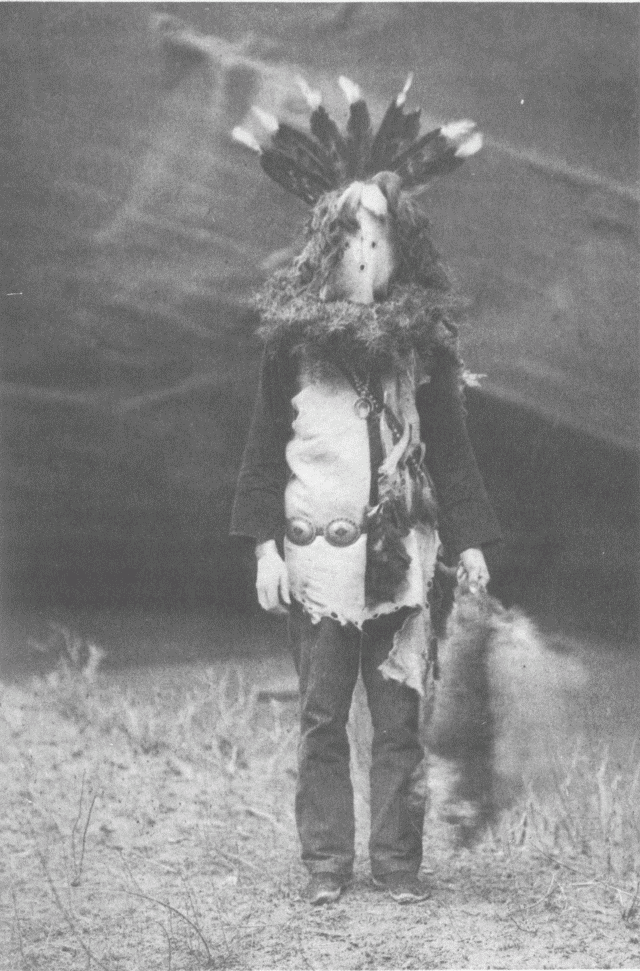
museum
das civilizações mortas para as culturas derrotadas, uma definição de museu quase sempre calada pela história ocidental. os museus contêm os derrotados, os que foram espoliados dos seus tesouros (que em Talking God, para além dos seus tesouros, eram as ossadas de milhares de antepassados). muito interessante: o museu como arma para a dominação.
"Here you see the gods of conquered people displayed like exotic animals in the public zoo. Only the overthrown and captured gods are here. Here you see the sacred things torn from the temple of Inca worshippers, stolen from the holy kivas of the Pueblo people, sacred icons looted from burned tepee villages on the buffalo plains."
(...)
"Do you doubt your privileged race, which claims such gentility, such humanity, would do this? Above your head, lining the halls and corridors of this very building [Museum of Natural History in Washington], are thousands of cases and bins and boxes. In them you find the bones of more than eighteen thousand of your fellow humans. You will find the skeletons of children, of mothers, of grandfathers.They have been dug out of the burials where their mourning relatives placed them, reuniting them with Great Mother Earth. They remain in great piles and stacks (...)
Hillerman on p. 205 of Talking God.
Thursday, September 6, 2012
história
quando se diz na Europa que os Estados Unidos têm tal e tal anos de história é geralmente no estado de espírito de quem olha para baixo. os chineses poderiam assim ficar em cima. neste delírio do elevador que serve propósitos mais ou menos propagandistas e xenófobos, a história vem, ainda, ligada aos países: assim, a história de Portugal não é a história deste espaço geográfico delimitado artificialmente, mas a história da nação. (quero ler a nova história, a que pode ver tudo de todas as perspectivas e a que pode focar qualquer espaço, ou qualquer grupo de pessoas.) quando pela primeira vez li que no Brasil se reclamava 'achamento' e não 'descobrimento', há tantos anos, vi que há o outro. mas ver esse outro é apenas um início frágil. o uso que se dá às palavras, isso sim, é um ver sem fim.

Tuesday, May 8, 2012
Kent Monkman

The Treason of Images, Kent Monkman (2008)
Monkman pode ser um arrivista usando o seu passado Cree (não sei se é), ao qual junta um complexo de Village People com final de pop kitsch. (Kinkade afinal morto de modo pouco angelical, à base de álcool e drogas). nada disto me atrai por aí além hoje, em zona vermelha para a pintura não virtual. aqui as palavras dizem muito. de certo modo abastardámos quase tudo, a credibilidade está ausente em quase todas as faces da vida quotidiana. viver assim coloca riscos sérios ['riscos sérios' parece-me agora tão a despropósito]. há quem abrace o estilo de vida, felizmente. (ver Eric Antoine, via Heidi) há quem reaja em pequenos mundos. dentro de casa a realidade deve ser a minha.
realidade e imagem: mas isto é outra coisa.
Saturday, April 7, 2012
'adventurer-writer', ou 'obsessively self-absorbed'
"Having children also makes it difficult to get out of the house. With a child you certainly can’t be a Bruce Chatwin or a Hemingway, living the adventurer-writer life. No running with the bulls at Pamplona. If you value your relationships with your children, you can’t write about them. You have to make up other, less convincing children. There is also one’s inclination to be charming instead of presenting a grittier truth about the world. But then, having children has also made me this particular writer. Without my children, I’d have written with less fervor; I wouldn’t understand life in the same way. I’d write fewer comic scenes, which are the most challenging. I’d probably have become obsessively self-absorbed, or slacked off. Maybe I’d have become an alcoholic. Many of the writers I love most were alcoholics. I’ve made my choice, I sometimes think: Wonderful children instead of hard liquor.", Louise Erdrich na Paris Review.
mesmo sem filhos, não sei se poderia correr com os touros de Pamplona.
Friday, December 23, 2011
'kindred spirits'

"More urgently, the 20th-century works seem plagued by a kind of physical deficiency, a failure to integrate motif and material into a seamless whole. In the Native American works this integration is always in force, although it is understandably most intense in the woven blankets and baskets, where there is no distinction between image and process, or art and craft, or front and back. The weaving forms a completely efficient, irreducible whole: figure and ground are one and visible to the same degree from both sides.", daqui.
Monday, May 16, 2011
"road to nowhere" (diversity)
"A human being, too, is many things. Whatever makes up the air, the earth, the herbs, the stones is also part of our bodies. We must learn to be different, to feel and taste many things thar are us. The animals and plants are taught by Wakan Tanka what to do. They are not alike. Birds are different from each other. Some build nests and some don't. Some animals live in holes, others in caves, others in bushes. Some get aong without any kind of home.
Even animals of the same kind – two deer, two owls – will behave differently from each other. I have studied many plants. The leaves of one plant, on the same stem – none is exactly alike. On all the earth there is not one leaf that is exactly like another. The Great Spirit, Wakan Tanka, likes it that way. He only sketches out the path of life roughly for all the creatures on earth, shows them where to go, where to arrive at, but leaves them to find their own way to get there. He wants them to act independently according to their own nature, to the urges in each of them.
If Wakan Tanka likes the plants, the animals, even little mice and bugs, to do this, how much more will he abhor people being alike, doing the same things, getting up at the same time, putting on the same kind of store-bought clothes, riding the same subway, working in the same office at the same job with their eyes on the same clock and, worst of all, thinking alike all the time. All creatures exist for a purpose. Even an ant knows what that purpose is – not with its brain, but somehow it knows. Only human beings have come to a point where they no longer know why they exist. They don’t use their brains and have forgotten the secret knowledge of their bodies, their senses, or their dreams. They don’t use the knowledge the spirit has put into every one of them; they are not even aware of this, and so they stumble along blindly on the road to nowhere – a paved highway which they themselves bulldoze and make smooth so they can get faster tot he big, empty hole which they’ll find at the end, waiting to swallow them up. It’s a quick, comfortable superhighway, but I know where it leads to. I have seen it. I’ve been there in my vision, and it makes me shudder to think about it."
em Lame Deer, Seeker of Visions
no título a propósito do Road to Nowhere de Monte Hellman. a semelhança está apenas nas palavras. de resto, a admiração até acriançada [a minha] pela sabedoria-wisdom de um homem que não sabia ler e de um povo sem literatura.
Subscribe to:
Posts (Atom)


