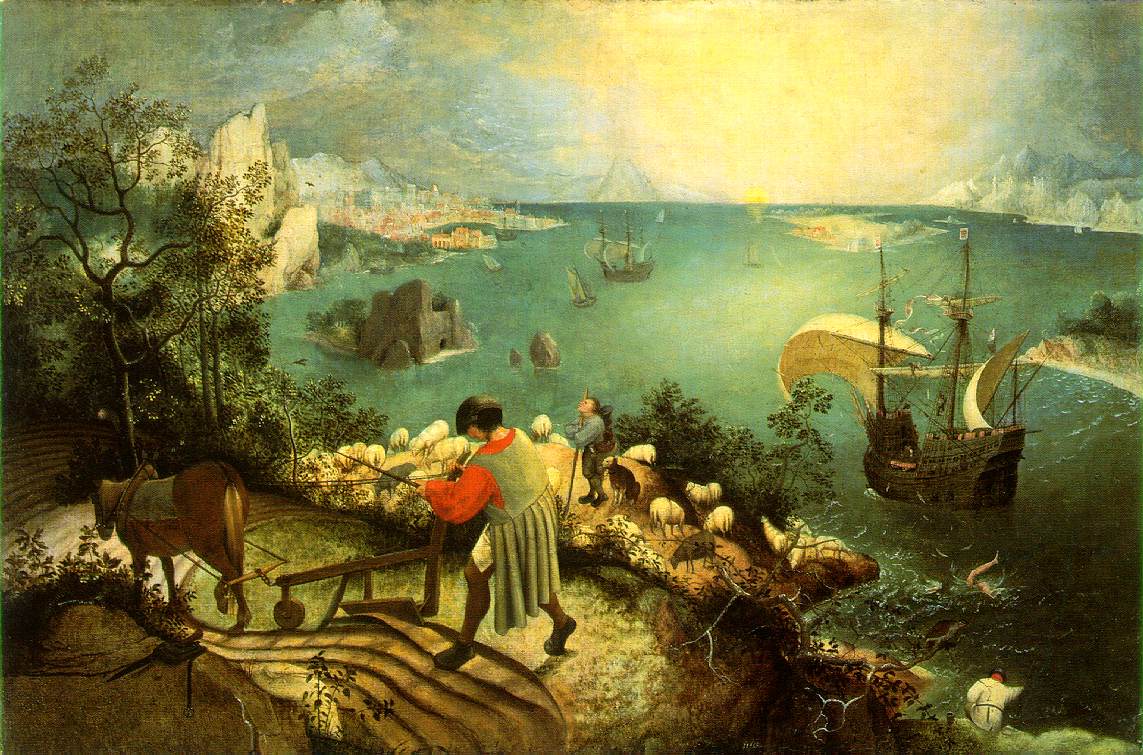
"Goethe: "Everything seemed to take its accustomed course. For even in the most terrible situations, when everything is at stake, people live on as if it were nothing of importance." That meekness is always surprising. Audent, it his poem on Breughel's painting of Icarus falling into the sea, observed that the Old Masters were never wrong about suffering, "how it takes place/ While someone else is eating or opening a window or just walking dully along." I think of how life went on in Argentina during the military dictatorship, people continuing with their daily lifes while their neighbours were being kidnapped and tortured, or pushed into a plane and dropped manacled into the river - continuing with their shopping, their social calls, their worries about prices and the weather - while news drifted through from time to time about a mysterious disappearance or a late-night arrest, together with excuses half believed in, maybe the neighbours were on holidays, maybe they'd been involved in some criminal activities, maybe they'd moved, and everything seemingly normal, their daily routine uninterrupted, even though, as Auden says, they "must have seen/ Something amazing, a boy falling out of the sky,/ Had somewhere to get to and sailed calmly on."
Manguel em A Reading Diary.
Musée des Beaux Arts
W.H. Auden
About suffering they were never wrong,
The Old Masters; how well, they understood
Its human position; how it takes place
While someone else is eating or opening a window or just walking dully along;
How, when the aged are reverently, passionately waiting
For the miraculous birth, there always must be
Children who did not specially want it to happen, skating
On a pond at the edge of the wood:
They never forgot
That even the dreadful martyrdom must run its course
Anyhow in a corner, some untidy spot
Where the dogs go on with their doggy life and the torturer's horse
Scratches its innocent behind on a tree.
In Breughel's Icarus, for instance: how everything turns away
Quite leisurely from the disaster; the ploughman may
Have heard the splash, the forsaken cry,
But for him it was not an important failure; the sun shone
As it had to on the white legs disappearing into the green
Water; and the expensive delicate ship that must have seen
Something amazing, a boy falling out of the sky,
had somewhere to get to and sailed calmly on.
-
tinha aqui o trabalho escravo no cacau, mas não passa de uma gota: é mais o que não vemos do que o que escolhemos ver.


No comments:
Post a Comment