
aqui, no Victoria and Albert.
One of the greatest portraitists in the history of photography, Julia Margaret Cameron (1815–1879) blended an unorthodox technique, a deeply spiritual sensibility, and a Pre- Raphaelite–inflected aesthetic to create a gallery of vivid portraits and a mirror of the Victorian soul. This will be the first New York City museum exhibition devoted to Cameron's work in nearly a generation, and the first ever at the Met. The showing of thirty-five works is drawn entirely from the Metropolitan's rich collection, including major works from the Rubel Collection acquired in 1997 and the Gilman Collection acquired in 2005.
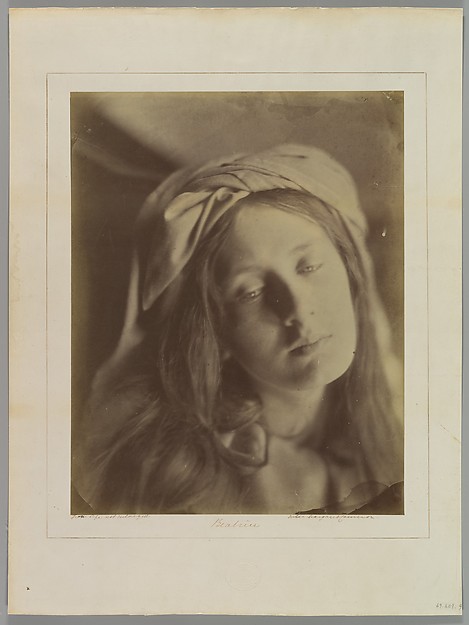
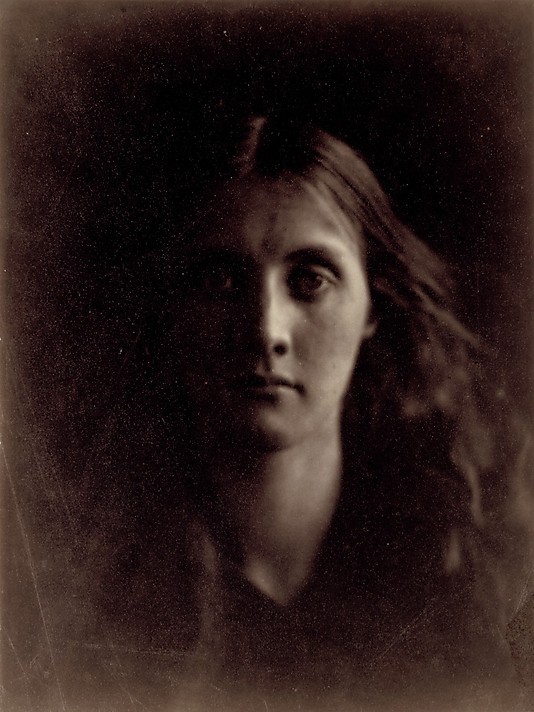
When she received her first camera in December 1863 as a gift from her daughter and son-in-law, Cameron was forty-eight, a mother of six, and a deeply religious, well-read, somewhat eccentric friend of many notable Victorian artists, poets, and thinkers. "From the first moment I handled my lens with a tender ardour," she wrote, "and it has become to me as a living thing, with voice and memory and creative vigour." Condemned by some contemporaries for sloppy craftsmanship, she purposely avoided the perfect resolution and minute detail that glass negatives permitted, opting instead for carefully directed light, soft focus, and long exposures that allowed the sitters' slight movement to register in her pictures, instilling them with an uncommon sense of breath and life.
texto do MET onde decorre neste momento uma exposição dedicada ao seu trabalho.
- -
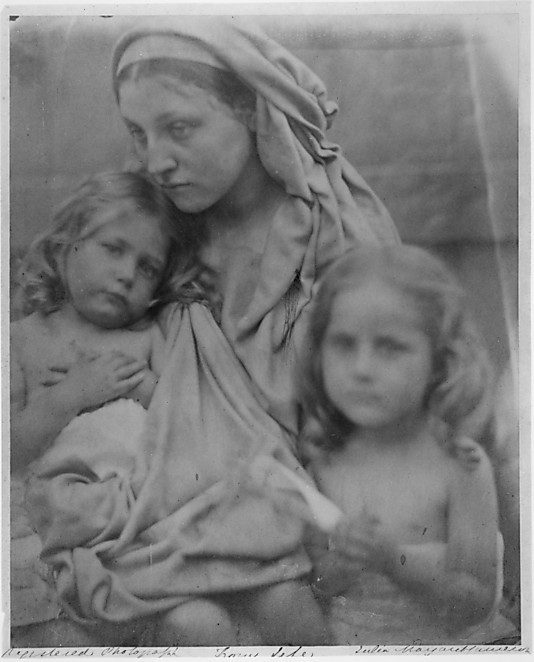
Most of her work, however, was done between the holiday visits of these great men, when she made photographs that concerned beauty, King Arthur, myth, the poetry of Tennyson, and the painting of Raphael, as she understood it. For models she used her friends and maids and their friends and children, and converted them by act of will into Biblical heroines, Renaissance cherubs, and Arthurian maidens.
These pictures by Cameron have been something of an embarrassment to her most sympathetic critics during the past generation, a period when photography has seemed ill-adapted to the functions of fiction. [meu itálico]. Nevertheless, the picture opposite ___ admittedly one of the less insistently anecdotal of her allegorical works ___ seems today a splendid picture: strongly constructed, well described, and most important, strangely moving. The three models are very beautiful, and if the central figure was in fact a teen-aged virgin, she became, for the minutes during which this picture was made, a most persuasive donna.
aqui, do Atget.
- -
os pontos de fascínio, para mim, de Cameron são tantos que tenho dificuldade em referi-los: o facto de ser uma mulher a fotografar mulheres é o mais óbvio; a procura do "inner man" nas séries que fez de personalidades masculinas e não a pose que era esperada e, acima de tudo, a ficcionalização das imagens - retrato, não só ilustração de histórias, narrativas ou conceitos mas elas próprias as constituindo histórias. uma mulher a quem oferecem a primeira câmara aos 48 anos e que durante dez anos produz uma obra admirável, transformando criadas e vizinhas em personagens bíblicas, madonnas, deusas gregas.

fotografias como desenhos de Da Vinci ou Michelangelo. a quarta mulher é, se não me engano, a mãe de Virginia Woolf.


No comments:
Post a Comment