The Chinese and the Greek Artists.
The Chinese and the Greeks disputed before the Sultan which of them were the better painters; and, in order to settle the dispute, the Sultan allotted to each a house to be painted by them. The Chinese procured all kinds of paints, and coloured their house in the most elaborate way. The Greeks, on the other hand, used no colours at all, but contented themselves with cleansing the walls of their house from all filth, and burnishing them till they were as clear and bright as the heavens. When the two houses were offered to tho Sultan's inspection, that painted by tho Chinese was much admired; but the Greek house carried off the palm, as all the colours of the other house were reflected on its walls with an endless variety of shades and hues.
from here, the whole of the Masnavi.
or here:
The story of the contention between the Greeks and the Chinese in the art of painting and picturing.
The Chinese said, “We are the better artists”; the Greeks said, “The (superiority in) power and excellence belongs to us.”
“I will put you to the test in this matter,” said the Sultan, “(and see) which of you are approved in your claim.”
The Chinese and the Greeks began to debate: the Greeks retired from the debate.
3470. (Then) the Chinese said, “Hand over to us a particular room, and (let there be) one for you (as well).” There were two rooms with door facing door: the Chinese took one, the Greeks the other.
The Chinese requested the King to give them a hundred colours: the King opened his treasury that they might receive that
(which they sought).
Every morning, by (his) bounty, the colours were dispensed from the treasury to the Chinese.
The Greeks said, “No tints and colours are proper for our work, (nothing is needed) except to remove the rust.”
3475. They shut the door and went on burnishing: they became clear and pure like the sky.
There is a way from many-colouredness to colourlessness: colour is like the clouds, and colourlessness is a moon. Whatsoever light and splendour you see in the clouds, know that it comes from the stars and the moon and the sun. When the Chinese had finished their work, they were beating drums for joy.
The King entered and saw the pictures there: that (sight), as he encountered it, was robbing him of his wits.
3480. After that, he came towards the Greeks: they removed the intervening curtain.
The reflexion of those (Chinese) pictures and works (of art) struck upon these walls which had been made pure (from stain). All that he had seen there (in the Chinese room) seemed more beautiful here: it was snatching the eye from the socket.
The Greeks, O father, are the Súfís: (they are) without (independent of) study and books and erudition,
But they have burnished their breasts (and made them) pure from greed and cupidity and avarice and hatreds.
3485. That purity of the mirror is, beyond doubt, the heart which receives images innumerable.
- -
as many different versions as there are poets, or storytellers.
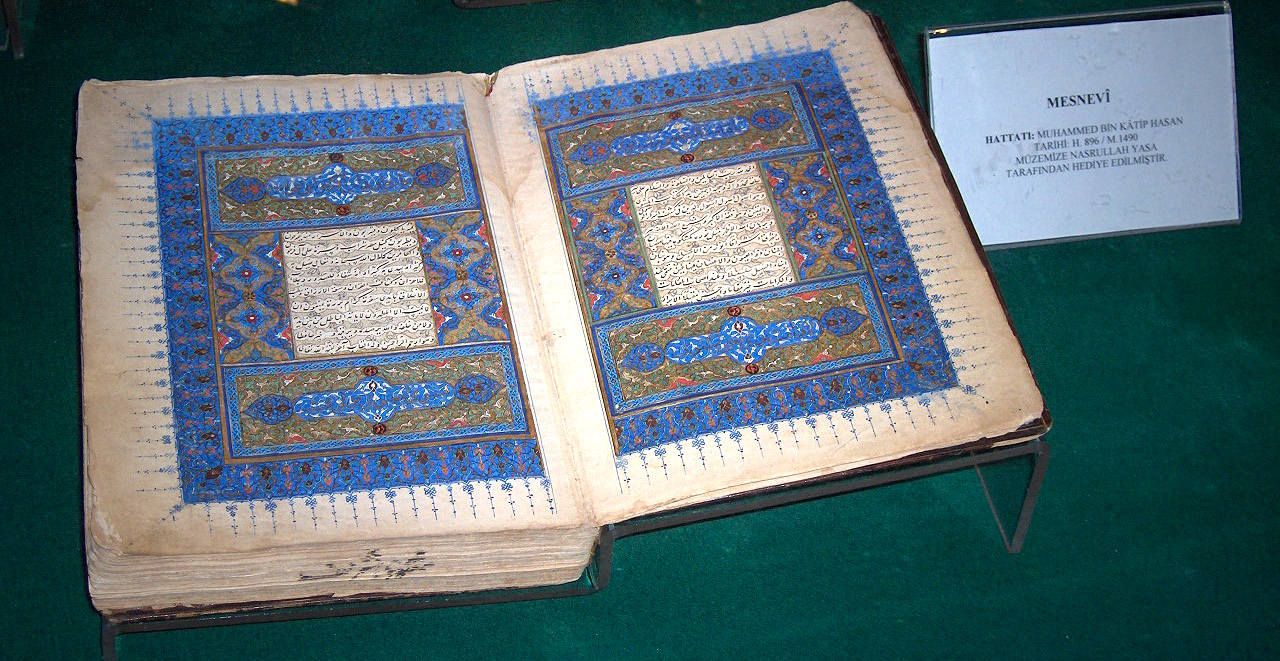
a minha versão na pequena selecção de The Masnavi, editada pela Profil.
a mesma história é contada por Pamuk em pelo menos dois dos seus livros, um tema que o persegue, realismo, becoming another, imagem-palavra, ilusão, criação de mundos, a natureza da arte.
Rumi, o sufista, nada nas águas de crer / não crer, mas os seus pensamentos ultrapassam em muito os seus próprios limites. o Masnavi é um dos grandes textos do passado. foi escrito entre 1258 e 1273, data da morte do poeta sufi.
a colecção de citações e poemas transformados que incluem rumi abundam na net, no fb, no twitter, nas listas de citações diárias. como com quase tudo, um passado ruminado para caber no presente, a cultura popular. um pouco como os restaurantes chineses em Portugal.
- -
Konya!, dizia o homem que subia e descia o elevador connosco. se tivessemos ido a Konya, ao centro de Rumi, teríamos talvez podido ver o manuscrito de Konya.


No comments:
Post a Comment